A half-used bag of almond flour can smell fine when you open it, then leave a stale, bitter edge in baked food. Its oils are more vulnerable to heat and oxygen than the starch in ordinary flour. A tightly closed container in the refrigerator or freezer may do more for it than a new pantry jar. Where a staple belongs depends on what it contains, how quickly you use it, and whether moisture, pests, heat, or light pose the biggest problem.
Start with a dry, cool storage area
Choose a cupboard away from the oven, dishwasher, sunny window, and warm pipes. Temperature swings and humidity can shorten the useful life of dry foods, even in packages that look intact. A dry, relatively cool cupboard beats a shelf beside the stove. In a humid kitchen, keep fewer open dry goods at room temperature and consider the refrigerator or freezer for more vulnerable items.
Before reorganizing, check shelves for crumbs, leaking bottles, and pantry insects. Wipe the surfaces and let them dry completely. Keep packages off the floor, with enough room around them to spot a spill or damaged seal. Pantry moths and grain beetles sometimes arrive in newly purchased goods; clean shelves make them easier to catch, not impossible to prevent.
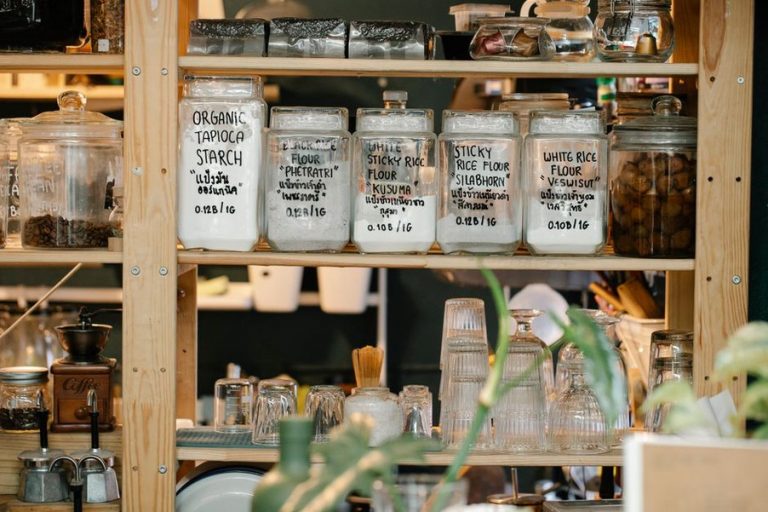
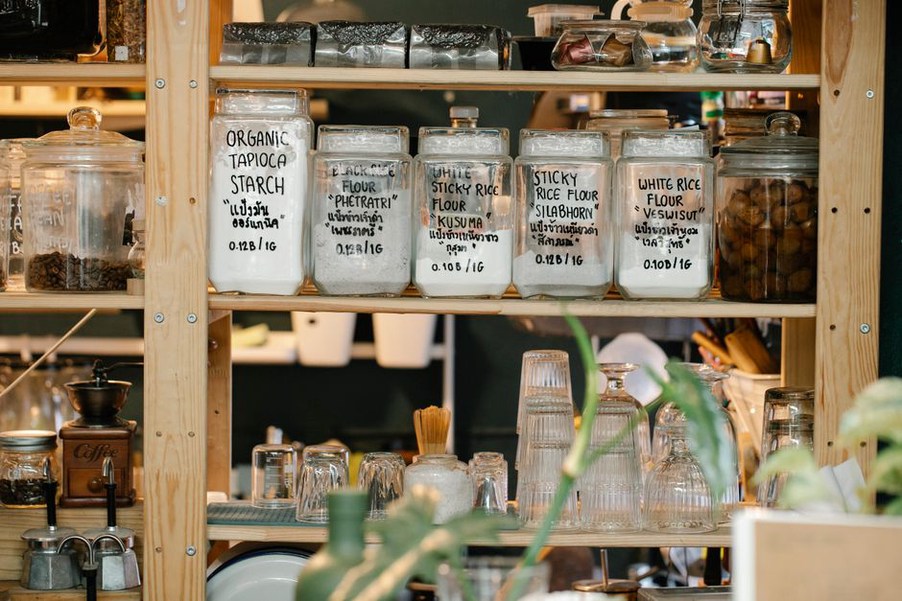
If you transfer food to a container, keep its name, ingredient information, and best-before date. Tape on part of the original label or write down the details, along with the opening date. That matters during a planned elimination diet: two similar-looking flours can have different ingredients. Follow any storage directions on the package over a general pantry rule.
Choose containers for protection, not appearance
A useful container is clean, dry, food-safe, and able to close securely. Glass and sturdy food-safe plastic both work for many dry staples. An opaque container shields light-sensitive foods such as oils and spices; a clear one lets you see when supplies are running low. Neither makes up for a damp shelf or a loose lid.
A resealable bag inside a larger bin lets you keep the original label. Gently press out excess air before sealing, taking care not to crush fragile food. In the freezer, use packaging made for freezing and seal it well to limit odors and quality loss. Match the container to the quantity, too: a small portion in a large container is exposed to plenty of air each time you open it.
Before refilling a container, empty it and inspect what's left. Clean it if needed, then let it dry fully. Use the older food first if it is still sound rather than pouring a fresh bag on top.
Store staples according to what makes them vulnerable
Nuts, seeds, and their flours
Nuts, seeds, coconut, almond flour, and other ground nut or seed products contain oils that can turn rancid. Whole nuts and seeds generally keep their quality longer than chopped or ground ones because less of their surface is exposed to air. A tightly closed package in a cool cupboard may be fine for a small amount you'll use soon. Refrigerate or freeze larger quantities and products you use slowly, especially ground ones.
Seal refrigerated or frozen flours well so they don't absorb moisture or odors. If you buy a large bag, freeze it in portions you would use for cooking. Take out one at a time; if condensation is likely, let the closed container warm toward room temperature before opening it. Discard nuts or flour that smell or taste sharp, paint-like, bitter, or otherwise off. Cold storage slows quality loss, but it cannot undo rancidity.
Nut and seed butters have different storage needs. Some separate naturally and need stirring; others call for refrigeration after opening. Follow the label, use a clean utensil, and close the jar promptly. If you find mold or notice an unexpected odor, discard the product rather than scraping off the top.
Grains, legumes, and alternative flours
If your household eats grains and legumes, keep dry rice, oats, and beans sealed in a dry cupboard, protected from moisture, pests, and strong odors. Whole-grain products can lose quality sooner than highly refined grains because they contain more oils. A cool spot or freezer may help with bulk purchases; check the package for other instructions.
Cassava, coconut, and other alternative flours differ in both cooking and storage. Coconut flour absorbs moisture readily, while any open flour can attract pests or take on odors. Leave each flour in its labeled bag inside a sealed container, or transfer it to a container with the label details. If you bake with it only occasionally, a smaller package may be easier to use up than a bulk bag.
Properly stored dry beans and lentils can remain usable for a long time, although older ones may take longer to cook or soften unevenly. Mark the purchase or opening date. Discard them if you find insects, visible mold, dampness, or a musty smell; don't test questionable food in a recipe.
Spices, dried herbs, and tea
Heat, light, air, and moisture gradually dull the flavor of spices and dried herbs. Keep them closed in a cupboard rather than on a rack above the stove. Whole spices often hold their aroma longer than ground ones. A faint-smelling spice may still be safe if it is dry and otherwise sound, but it will add less flavor.
Tip spices into a dry spoon instead of shaking the jar over a steaming pot. Steam can cause clumping and shorten storage life. Keep tea sealed and away from strongly scented foods, which can affect its flavor. If you use a particular spice only once a month, buy a small jar instead of a bulk bag.
Oils and other bottled staples
Store unopened cooking oils as the label directs, usually capped in a cool, dark place. After opening, limit their exposure to heat, air, and light. Some oils benefit from refrigeration; others turn cloudy or firm in the cold without being spoiled. Check the instructions and buy a bottle size you can finish while the oil still tastes fresh. Don't use oil with an unpleasant, stale smell.
For more on choosing fats for cooking and individual food preferences, see the blog's guide to paleo cooking oils and digestive comfort.
Vinegar and shelf-stable condiments have different after-opening rules. A bottle that belongs on a shelf before opening may need refrigeration afterward, so read its label. Use a clean spoon for jarred products to avoid adding crumbs or moisture.
Separate freshness from food safety
A best-before date generally refers to expected quality; it doesn't mean a food automatically becomes unsafe the next day. A use-by date, where it appears, may have a different safety meaning under local labeling rules. Package directions and signs of spoilage matter too. Don't taste food to check its safety if you see mold, insects, damp clumps, or damage that may have allowed contamination.
Dry foods need to stay dry. After a flood, plumbing leak, or substantial spill, discard food that could have been contaminated. A paper bag offers little protection, and even a closed container needs checking if water may have entered. Cooking or baking does not make visibly moldy pantry food suitable to eat.
Home-dried foods, homemade mixes, and opened packages may need different storage from commercially sealed products. A shelf-stable label describes the product as sold, not necessarily a homemade version or leftovers after preparation. Prepared broth, cooked beans, and other cooked foods need appropriate refrigerator or freezer storage, not a spot beside the dry staples.
Make a storage plan that matches how you eat
On a paleo-style or other exclusionary eating pattern, specialty ingredients can be costly and easy to overbuy. Before picking up a large bag of almond flour, think about how many recipes you'll make and whether you have freezer space. A lower price per unit won't save money if the flour goes stale.
If you're temporarily excluding foods and later reintroducing them, label ingredients clearly. Use separate utensils or containers where cross-contact matters for your circumstances. A diagnosed food allergy calls for guidance specific to that allergy; a general elimination plan is not the same as allergy-safe handling. Discuss persistent symptoms and significant diet changes with a healthcare professional. Neither stricter food rules nor better storage can diagnose a condition or replace medical care.
A short monthly pantry check helps you catch forgotten purchases:
- Inspect opened packages for damaged seals, dampness, pests, or off odors.
- Move sound, older food to the front and plan how you'll use it.
- Check oils, nut butters, and condiments for after-opening directions.
- List what needs replacing, including a package size you can reasonably finish.
If you find pantry insects, inspect nearby foods, including unopened paper and cardboard packages. Discard infested goods and clean the affected shelves, corners, and crevices. Check sound foods before moving them into secure containers. Avoid spraying pesticides around exposed food, and don't expect new jars to solve an existing infestation. If it continues, ask a qualified local pest-control service for advice.
Use the package date as a planning tool
No single number of weeks guarantees freshness for every pantry staple. Processing, packaging, temperature, humidity, and how often you open a container all affect quality. Use dates alongside the manufacturer's storage instructions and signs that a food has deteriorated. If you must avoid a particular ingredient, keep the original ingredient label after transferring the food; formulations can change between purchases.
Set aside a small spot for food to use soon. Put an opened bag of coconut flour at the front of the baking shelf, for example, and write its opening month on the label. Keep a sealed backup in a cooler cupboard or freeze it if you won't need it for a while. At the next pantry check, inspect the open bag before buying more.