
You've cut out grains, dairy, and sugar. Your fridge is full of meat and vegetables. But are you actually getting enough nutrients? When people first shift to a Paleo or Autoimmune Protocol (AIP) diet, the focus usually lands on what to remove: grains, legumes, dairy, refined sugar, processed oils. That removal phase is necessary for many, especially when you are investigating food sensitivities or trying to calm an overactive immune system. But elimination alone does not guarantee a nourishing diet. You can eat only AIP-compliant foods and still end up with meals that are low in key vitamins, minerals, and phytonutrients. That is where the concept of nutrition density becomes a practical tool rather than an abstract ideal.
Nutrition density is not about counting every microgram of selenium or memorizing the zinc content of oysters. It is a heuristic — a mental shortcut — that helps you look at a plate and ask: How much nourishment is packed into each bite relative to the energy (calories) it provides? On a Paleo template, this question matters because many of the foods you now include (meat, vegetables, fruit, healthy fats) vary widely in their nutrient profiles. A chicken breast and beef liver are both Paleo, but their nutrition densities are drastically different. Understanding that difference helps you build meals that support digestion, energy, and long-term health without needing to micromanage every meal.
Let us walk through what nutrition density looks like in practice, how to assess it without turning mealtime into a spreadsheet, and where common pitfalls hide even in a well-intentioned elimination diet.
What nutrition density is (and is not)
The term "nutrition density" gets thrown around loosely. In research contexts, it often refers to the ratio of essential nutrients (vitamins, minerals, protein, fiber) to total calories, sometimes adjusted for bioavailability or anti-nutrient content. For everyday eating, a simpler definition works: a nutrient-dense food provides a substantial amount of vitamins, minerals, or bioactive compounds relative to its calorie load. Leafy greens, organ meats, shellfish, and colorful vegetables rank high. Refined oils, white rice, and lean muscle meat without fat rank lower.
This does not mean low-density foods are bad. White rice, for example, is a staple in many therapeutic diets for people with severe digestive distress because it is low in fiber and fermentable carbohydrates. But if your plate regularly centers on low-density foods, you may fall short on nutrients that support immune regulation, gut barrier integrity, and energy metabolism — especially during a restrictive elimination phase.
How to assess nutrition density on your plate
Rather than memorizing tables, use a simple visual and sensory check. Look at your meal and ask three questions:
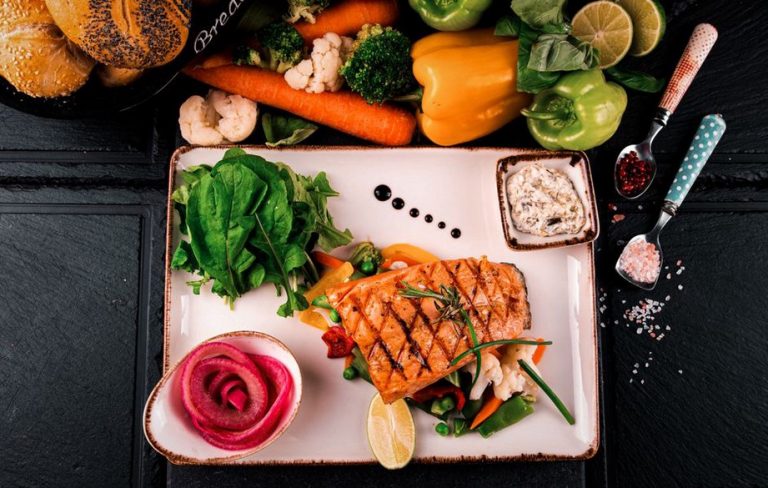
- How many colors are present? Not counting white or beige. Aim for at least three distinct colors from vegetables or fruit. Each color family tends to carry different phytonutrients: anthocyanins in purple, carotenoids in orange/yellow, chlorophyll and sulforaphane in green.
- Is there an organ meat or shellfish this week? Muscle meat is fine, but liver, kidney, heart, oysters, and clams are among the most nutrient-dense foods on the planet. They provide preformed vitamin A, B vitamins, copper, zinc, and iron in forms the body readily uses.
- Are there raw or lightly cooked vegetables? Cooking destroys some heat-sensitive vitamins (like vitamin C and folate) but also makes others more bioavailable (like beta-carotene and lycopene). A mix of raw and cooked produce gives you the best of both worlds.
If you answer "no" to one of these questions regularly, that is a signal — not a failure — to adjust your next shopping list or recipe choice. The goal is not perfection at every meal, but a pattern over days and weeks that trends toward higher density.
Common density pitfalls on Paleo and AIP
Even experienced Paleo eaters fall into several traps that quietly lower the nutrition density of their diet. Recognizing them helps you course-correct without guilt.
Over-reliance on muscle meat
Chicken breast, ground beef, and pork loin are convenient and versatile. But they are relatively low in micronutrients compared to organ meats, fatty fish, or pastured eggs. If your protein source is always a lean muscle cut, you miss out on fat-soluble vitamins (A, D, E, K2) and minerals like copper and zinc that are concentrated in organs and fat tissues. A simple shift: include liver once a week, or mix ground liver into ground meat dishes.
Vegetable monotony
It is easy to rotate the same three vegetables — broccoli, spinach, bell peppers — because they are familiar and easy to prepare. But nutrient density improves with variety. Different plant families offer different phytochemical profiles. Cruciferous vegetables (broccoli, cabbage, kale) support detoxification pathways. Alliums (onion, garlic, leeks) provide prebiotic fibers and sulfur compounds. Root vegetables (carrots, beets, sweet potatoes) deliver beta-carotene and resistant starch. Rotate your greens, too: switch from spinach to arugula to watercress to dandelion greens across the week.
Fat quality over quantity
Healthy fats are essential on a Paleo diet, but not all compliant fats are equal in nutrition density. Olive oil, avocado oil, and coconut oil are energy-dense but contain few micronutrients. Animal fats from pastured sources (tallow, lard, duck fat) provide small amounts of vitamins and conjugated linoleic acid. Fatty fish like salmon and mackerel supply omega-3s plus vitamin D and selenium. Use a mix of fat sources rather than relying on one bottle of oil.
Overcooking vegetables
Boiling vegetables until soft leaches water-soluble vitamins into the cooking water. Steaming, roasting, or stir-frying preserves more nutrients. If you do boil, save the cooking liquid for soups or stews to recapture those vitamins.
The role of bio-individuality in density
Nutrition density is not a universal checklist. Your personal needs shift depending on your digestive capacity, your stage of reintroduction on AIP, and any ongoing gut issues. Someone with low stomach acid may not absorb zinc and B12 well from animal foods, so they might need to prioritize cooked vegetables and fermented foods to support digestion first. Someone with histamine intolerance may react to high-histamine foods like bone broth, fermented vegetables, or leftover meat — even though those foods are typically considered nutrient-dense. In that case, density looks different: fresh, low-histamine vegetables and freshly cooked meats become the foundation.
If you are working through a reintroduction protocol, you might find that some high-density foods (like eggs or nightshades) trigger symptoms. That does not mean you are failing at nutrition. It means your current baseline density must come from the foods you tolerate well. Over time, as your gut heals, you may be able to expand your repertoire. This is where keeping a food and symptom journal becomes invaluable. Tracking how you feel after meals helps you distinguish between a true food intolerance and a temporary digestive adjustment.

For a deeper look at how to refine your elimination diet when bloating persists despite AIP compliance, you might find the discussion in When AIP Alone Isn't Enough: Troubleshooting Bloating with FODMAPs helpful. It covers how fermentable carbohydrates can affect even strictly compliant eaters.
Practical steps to improve density without stress
You do not need to overhaul your entire diet overnight. Small, repeatable changes accumulate. Here are three that require minimal effort:
- Add a handful of greens to every cooked meal. Stir spinach or kale into soups, stews, and sauces just before serving. They wilt down to almost nothing, so you barely notice them, but they boost folate, vitamin K, and magnesium.
- Use bone broth as a cooking liquid. Instead of water, cook rice, vegetables, or stew meat in homemade bone broth. It adds collagen, glycine, and minerals like calcium and magnesium. If histamine is a concern, use a quick broth (30-minute simmer) and freeze it immediately.
- Eat the rainbow across the week, not just the day. If your Monday plate is all green vegetables and your Tuesday plate is all orange, that is fine. The body stores many nutrients, so variety over a few days matters more than perfect balance at every meal.
When density conflicts with digestive comfort
There is a tension that often goes unspoken in Paleo circles: some of the most nutrient-dense foods are also the hardest to digest for sensitive guts. Raw cruciferous vegetables, high-sulfur foods (egg yolks, garlic, onions), and high-fat meals can trigger bloating, gas, or discomfort in people with compromised digestion. If you are in the early stages of an elimination diet or managing a condition like SIBO, you may need to temporarily favor easily digestible, lower-density foods — such as well-cooked zucchini, peeled sweet potatoes, and lean protein — until your gut motility improves.
This is not a contradiction. It is a recognition that nutrition density must be layered on top of digestive tolerance, not the other way around. Pushing high-density foods that you cannot digest only leads to inflammation and malabsorption, which defeats the purpose. The art lies in finding the overlap between what is dense and what you can comfortably handle at your current stage.
If you are curious about how to elicit honest feedback from your body during this process, the post on The Art of the Food Interview: How to Elicit Honest Feedback from Your Body offers a structured approach to self-inquiry that goes beyond generic symptom tracking.
Beyond the plate: density in context
Nutrition density is one lens, but it is not the only one. Sleep quality, stress management, hydration, and gut microbiome diversity all influence how well you absorb and utilize the nutrients you eat. A perfectly dense meal eaten while stressed or rushed will not deliver the same benefit as the same meal eaten calmly with adequate chewing. Likewise, a diet that is moderately dense but consistently eaten with good digestive habits often outperforms a theoretically perfect diet eaten under chronic stress.
Next time you plate your meal, pause for a second. Look at the colors. Ask yourself if you have had any organ meat this week. If not, no stress — just a nudge for your next grocery run. That simple check is enough to keep your diet moving in the right direction. Some days you will eat a simple meal of roasted chicken and carrots, and that is enough.