A used bicycle can look clean in photos and still need a costly wheel, drivetrain, or brake repair. Before arranging a viewing, ask for the model, approximate age, frame size, clear photos of both sides, and a description of anything that does not work. A seller who cannot provide a serial number or explain how they acquired the bike deserves extra scrutiny.
Start with the riding you actually plan to do
Choose the type of bike before comparing listings. A commuter may benefit more from reliable brakes, mounting points for a rack, and room for wider tires than from a low weight. A road bike built for speed may feel uncomfortable on rough paths; a mountain bike with heavy suspension can be inefficient for a mostly paved journey. Hybrid bikes cover a broad middle ground, but the label alone says little about fit or condition.
Set a total budget rather than spending everything on the asking price. Allow for a helmet if needed, a suitable lock, lights, and a mechanic’s inspection or initial service. Tire replacement, brake work, and a worn chain can quickly change the value of a seemingly cheap bike. If you already have a bicycle that fits, note its frame size and key measurements as a starting point, not a guarantee: sizing varies by brand and geometry.
Check that the frame fits before evaluating the deal
Stand over the bike in the shoes you normally ride in. You should have comfortable clearance above the top tube, particularly if you expect to stop often or ride on uneven ground. With the saddle adjusted to a sensible height, you should be able to pedal without rocking your hips or fully locking your knee. Your hands should reach the bars without feeling stretched or cramped.
A short test ride is more informative than a size sticker. Notice whether you can steer and brake confidently, whether your wrists carry too much weight, and whether the bike feels manageable when starting and stopping. Saddles and stems offer some adjustment, but they cannot reliably correct a frame that is substantially too large or small. If the seller will not permit a test ride, ask whether you can have a local mechanic inspect the bike before purchase.
Inspect the frame and fork in good light
Dirt and stickers can hide damage. Look along the frame tubes and fork for dents, cracks, unusual ripples, or paint lines that cross a joint. Pay close attention around the head tube, bottom bracket, dropouts, and welds. Minor scuffs from normal use are different from damage following a hard impact. On a carbon frame or fork, impact marks or suspected cracks call for a qualified assessment; damage may not be easy to judge by sight.
Check that the front wheel sits centrally in the fork and the rear wheel sits straight in the frame. Misalignment can have several causes, including a poorly seated wheel, so do not assume a bent frame—but do not dismiss it without finding the cause. Look for severe corrosion on steel parts and signs of neglect around bolts, bearings, and cable entry points. If the seatpost cannot be adjusted because it is seized in the frame, the bike may be difficult and expensive to make fit.
Look for signs of an unsafe repair
Fresh paint over one small area, mismatched fork and frame finishes, or uneven gaps around the wheels are reasons to ask questions, not proof of a problem. A seller may have replaced a fork for ordinary reasons. What matters is whether the work and replacement parts are appropriate and can be explained. Walk away from visible cracks, a sharply bent fork, or a frame with questionable structural repairs unless an independent specialist has assessed it.
Test the wheels, tires, and bearings
Lift each end of the bike and spin the wheel. It should rotate freely without a pronounced side-to-side wobble or a regular rub against the brake. Small deviations may be repairable; a badly bent rim or damaged spokes can require more substantial work. Squeeze pairs of spokes gently and look for missing or obviously loose ones. Check the rim’s braking surface on bikes with rim brakes: deep grooves, cracks, or a concave-looking sidewall warrant professional attention.
Inspect tires for cuts, bulges, exposed casing threads, and cracking along the sidewalls. Worn tires are replaceable, but their cost belongs in your budget. Hold the wheel at opposite sides and gently rock it sideways. Noticeable play may indicate a hub bearing or axle issue, although the source needs proper diagnosis. Repeat a gentle rocking check at the handlebars while holding the front brake; a knock near the steering bearings can indicate a loose or worn headset.
Check brakes and shifting under load
With the bike stationary, squeeze each brake lever. It should not pull all the way to the handlebar, and the brake should stop its wheel firmly. Inspect pads for wear and check whether they contact the intended braking surface rather than the tire. Disc brakes should not have visibly damaged rotors or persistent severe rubbing. Hydraulic brakes that feel spongy may need service. A parking-lot squeeze test cannot confirm how well brakes perform on a hill, so test them cautiously during the ride.
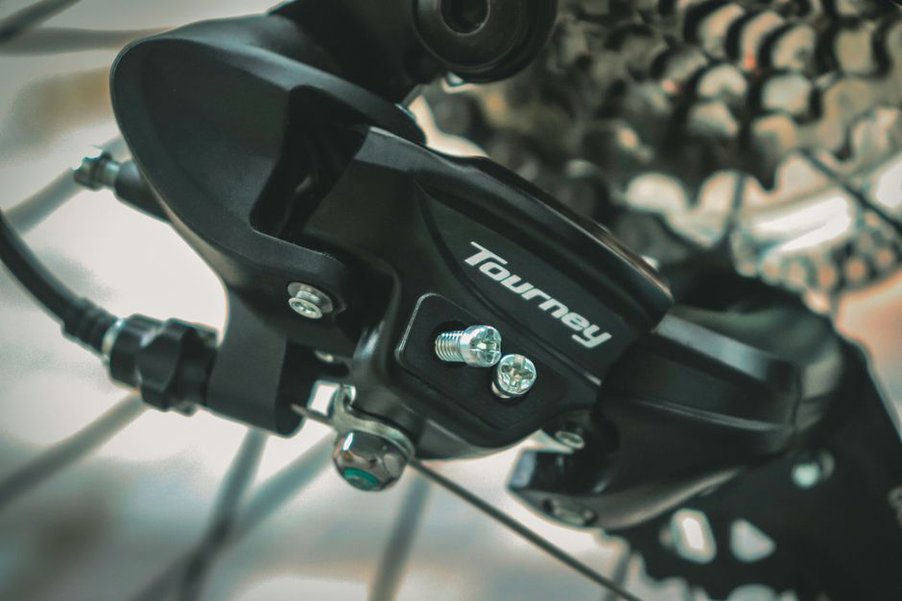
Shift through the available gears while pedaling. Changes should occur without repeated skipping, loud grinding, or the chain falling off. Under gentle uphill effort, pay attention to whether the chain slips when you press on the pedals. A worn chain can accelerate wear on the cassette and chainrings; replacing all three costs more than replacing a chain alone. Rust, hooked-looking teeth, damaged cables, or a bent rear derailleur are useful clues, though a mechanic can distinguish adjustment issues from worn parts.
Spin the pedals and turn the cranks by hand. Roughness, clicking, or side-to-side movement can point to bearing or crank problems. On a suspension bike, check that the fork or shock moves smoothly and does not leak oil. Suspension service can be a significant expense, making a simple rigid bike a more practical used purchase for some riders.
Ask about ownership and the bike’s history
Request the frame serial number, usually stamped or printed on the frame, and compare it with any receipt or ownership record the seller has. Check available local stolen-bike registers where you live. A register search is useful but cannot guarantee a bike is legitimate. Be cautious if the serial number has been removed or altered, the price is implausibly low, or the seller refuses to discuss ownership. Local rules about proof of ownership and sales paperwork differ, so check what applies where the transaction takes place.
Ask when the bike was last serviced, which parts have been replaced, and whether it has been involved in a crash. A detailed answer is helpful, but verify condition yourself rather than treating a service claim as a warranty. For an e-bike, also confirm that the battery and charger are compatible with the system, ask about battery age and storage, and test the assist in every available mode. Replacement batteries can be expensive, and a short ride cannot establish their remaining capacity. An authorized service provider may be able to run a diagnostic check.
Make the viewing and purchase straightforward
- Meet in daylight where you can inspect the bike without rushing; bring a friend if that makes the transaction more comfortable.
- Take a small light and, if available, a tire-pressure gauge. Low pressure can disguise how a bike rides and should be addressed before judging handling.
- Agree on a safe test-ride arrangement with the seller before riding, including how they want to hold a deposit or identification.
- Write down the serial number and keep a dated record of the sale with the bike description, price, and seller details permitted by local law.
If you are uncertain about repair costs, ask a bike shop for an inspection quote before committing. For example, a bicycle priced at $180 that needs two tires, a chain, and brake work may be less economical than a $260 bicycle with recent service records and a better fit. The exact costs depend on local labor rates and parts, so get an estimate rather than guessing from the listing price.
Before handing over payment, take one final slow ride and shift through the gears you will use most. Then check that the wheels are secured correctly, the seatpost clamp holds its position, and both brakes still engage firmly after the ride.