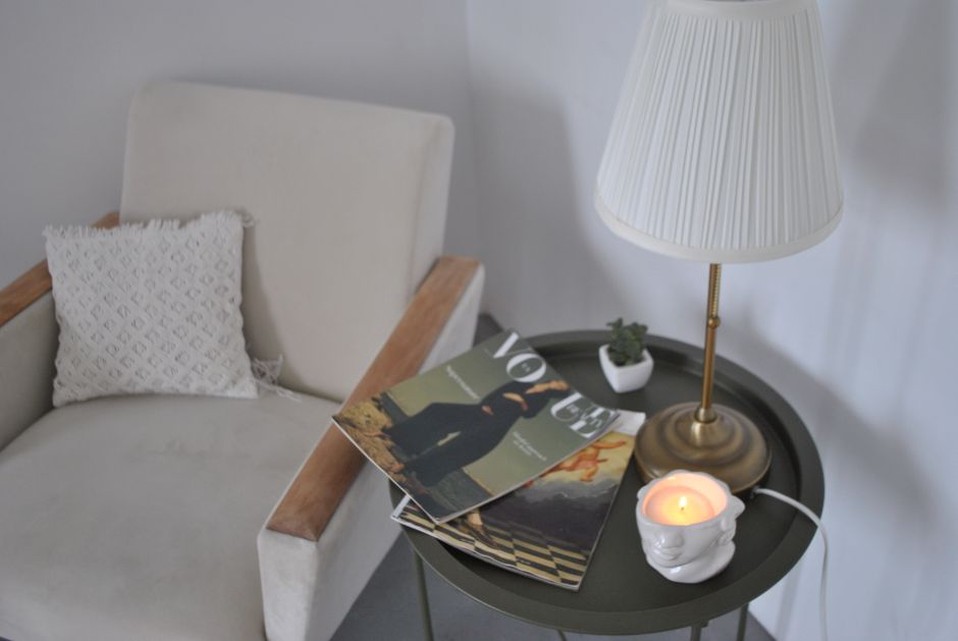
A chair can feel comfortable for five minutes and leave your neck sore after half an hour if the book sits too low. Before you buy anything for a reading corner, sit in the spot with a book or e-reader. Notice where your elbows land, whether your feet reach the floor, and how the light falls on the page. That quick test tells you more than a photo of a perfectly styled nook.
Choose the spot before the furniture
Find a place where you can sit without blocking a doorway, radiator, or storage you use often. A window brings in daylight, but direct sun can cause glare on glossy pages or make the spot too warm. Try it at the time you normally read: a bedroom corner that works in the afternoon may be too dim at night, while a living-room alcove may need some distance from the television.
You do not need a dedicated room. One end of a sofa with a nearby lamp may work as well as an armchair. If space is tight, use a chair and a small stack of books to test the footprint before moving furniture. Check that people can walk past and that you can reach the light switch.
Support the way you actually sit
Choose a seat that supports your back without keeping you in one position. Your feet should rest comfortably on the floor or a stable footrest. If the chair is deep, a firm cushion behind your lower back may keep you from leaning forward. Armrests help when you can rest a book on them without hunching your shoulders.
A soft throw is welcome; a pile of cushions that leaves no room to shift is less useful. If you read lying down, prop up your head and book rather than holding a heavy volume above your face. Change position now and then during a long session. You should be able to move without rebuilding the whole setup.
Make the page easy to see
Put a lamp where it lights the book rather than the wall behind you. A movable arm or shade gives you more control than an overhead light alone. Start with the lamp slightly behind and to one side of your shoulder, then adjust it until your hand casts little shadow on the page. Keep the bulb and shade out of your direct line of sight.
Daylight shifts, so even a window seat benefits from an adjustable lamp. For paper books, lighting the page well may matter more than finding a particular bulb color. With an e-reader, match the screen brightness to the room instead of using a bright display in the dark. If print is still hard to read under good light, larger type or an eye exam may help more than another lamp. The Mayo Clinic’s overview of eyestrain offers practical ways to reduce visual discomfort during close work.
Keep useful things within reach
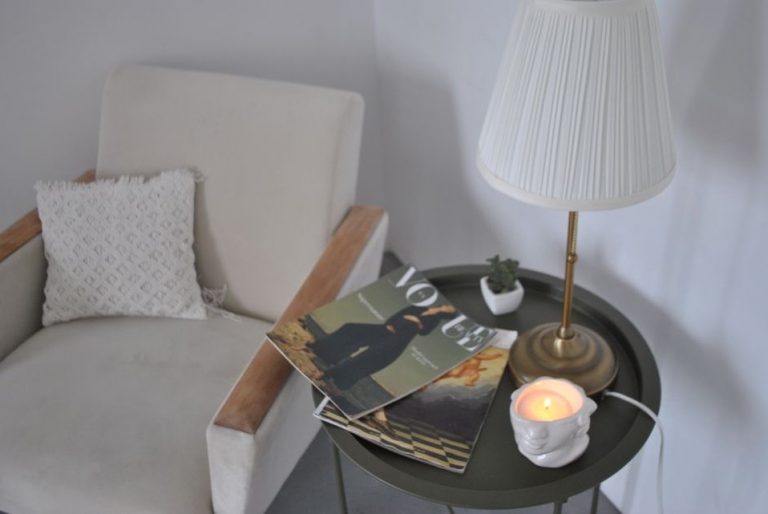
Getting settled is easier when you do not have to cross the room for your glasses or a drink. Pick a stable side table or shelf with room for those items, a book, and a lamp. Test the height while seated: you should be able to set down a cup without twisting or reaching over an armrest.
- For paper books: Keep a bookmark and a place for the book you are reading, rather than piling unread titles on the seat.
- For devices: Keep charging cables out of the walking path. Use a suitable nearby outlet instead of stretching a cord across the room.
- For drinks: Put water or tea on a flat surface, away from electrical connections and books you want to keep dry.
- For temperature: Keep a light blanket nearby if the room cools in the evening, but leave fabric clear of heaters and bulbs.
A small basket can hold loose items. Leave some table space free for whatever is in your hands.
Manage distractions without sealing yourself away
It is hard to follow a page when you keep looking up. A rug, curtains, or upholstered furniture may soften echoes, though none will soundproof the room. Turning the chair away from a screen may do more than adding decorations. In a shared space, a simple cue—switching on the reading lamp, for example—can let others know you would like a short stretch without conversation.
Keep the spot comfortable to occupy as well. Leave ventilation openings clear, and skip strong fragrances if they bother anyone at home. If you read with a snack, use a surface you can wipe down and clear away crumbs afterward. Your snack does not need to follow a particular diet. If you have persistent digestive symptoms or are considering changes to what you eat, discuss both with a doctor; a reading routine is not a substitute for medical care.
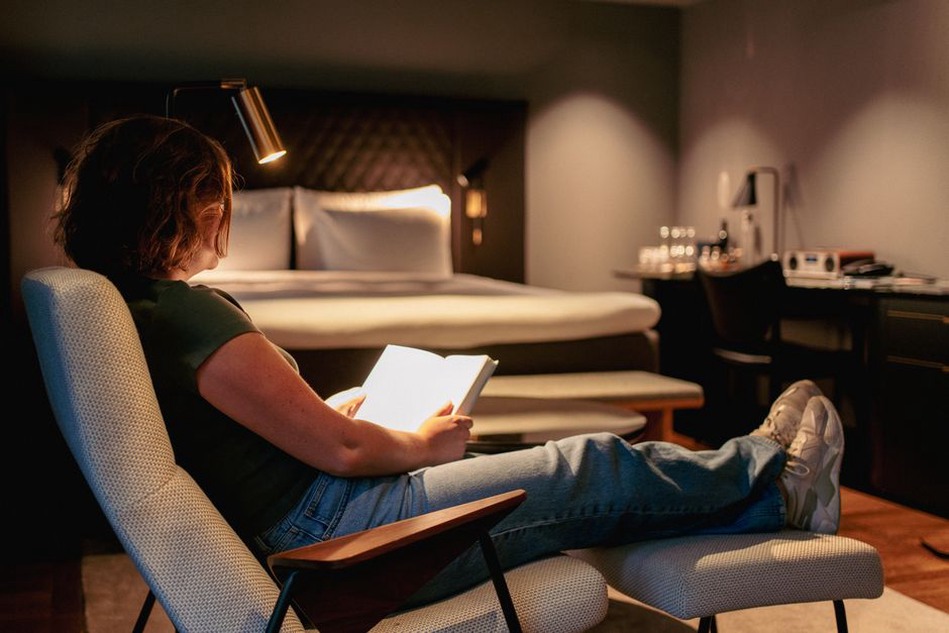
Test it with a real reading session
Spend twenty or thirty minutes in the corner before deciding it is finished. What interrupts you? Perhaps the lamp shines in your eyes, there is nowhere to put your glasses, or the chair makes you slide forward. Change one thing and try again. Moving a lamp a few inches or adding a folded cushion may solve a problem without new furniture.
Keep upkeep easy: put the current book back on its shelf or in its basket, clear cups, and check that the lamp and cord are still safely placed. If others use the space, they should not have to move a collection of pillows before sitting down.
For a first test tonight, set a chair beside a stable surface, bring over a lamp, and read ten pages. Adjust the light until the whole page is lit without a bright reflection. Remember where you placed the lamp so you can set it there again tomorrow.