
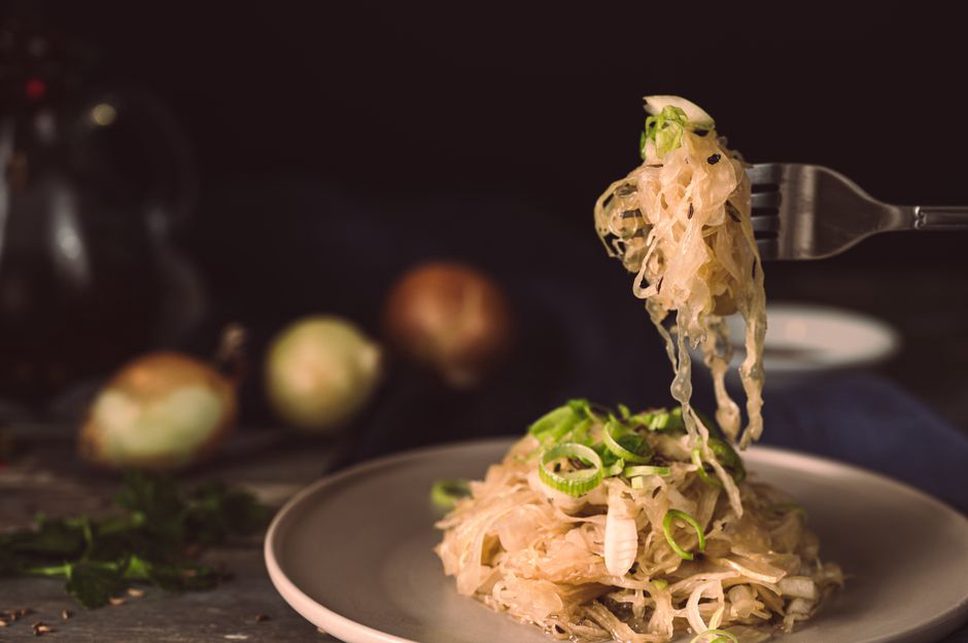
A jar of shredded cabbage may smell pleasantly sour after fermentation, but a few bubbles and a tight lid do not tell you whether it is safe to eat. For a first batch, choose a tested recipe, measure the salt, and keep the cabbage beneath the brine. Those choices matter more than special equipment—or finding a way to put fermented food on every plate.
Fermentation preserves food through the activity of microorganisms. In vegetable ferments, naturally occurring lactic acid bacteria use some of the vegetables’ sugars and produce acid. The tangy result can brighten a paleo-style meal. Gut-health claims need more care: homemade ferments may contain live microbes, but their contents vary. Eating them is not a proven treatment for digestive or autoimmune conditions.
What fermented foods can—and cannot—tell us about gut health
“Fermented food” covers several different processes. Sauerkraut and fermented carrots rely on lactic acid fermentation. Vinegar-pickled vegetables are acidified rather than fermented in the jar. Kombucha and water kefir involve different microbial communities and call for their own safety practices. And fermentation does not guarantee live microbes in the food you eat: heating, canning, or pasteurization can reduce or eliminate them.
Some human studies suggest fermented foods may affect measures of the gut microbiome or immune activity. That does not mean a spoonful of homemade kraut will relieve bloating or change any one person’s microbiome predictably. The microbes present, storage conditions, serving sizes, and the rest of a person’s diet differ. Homemade ferments are not interchangeable with studied probiotic products, which identify specific strains and amounts.
Fermented vegetables have a simpler appeal, too: they are vegetables, and they add variety and flavor. They do not replace a varied intake of produce or meet every nutrient need. Because salt remains in the finished food, think of a salty ferment as a condiment rather than an unlimited stand-in for fresh vegetables.
Choose an appropriate first project
A tested sauerkraut recipe is often easier to manage than an improvised jar of mixed vegetables. Salted cabbage releases liquid as you work it, forming the brine that covers the shreds. Choose a recipe from a reliable food-preservation authority that specifies the cabbage weight, salt amount, vessel, fermentation conditions, and signs of completion. Follow its measurements instead of salting to taste or cutting the salt for a lower-sodium batch; salt helps create conditions favorable to the intended fermentation.
Start with fresh, sound cabbage, free of mold or decay. Wash your hands, utensils, weights, and jars thoroughly, then rinse away soap residue. Use food-grade glass or another fermentation-safe container with a clean weight that fits inside. Follow the recipe’s directions for an airlock or for releasing gas from a suitable lidded vessel. Never use a container that traps pressure without a way to vent it.
A practical sauerkraut workflow
- Weigh and prepare. Remove damaged outer leaves and shred the cabbage. Weigh the prepared cabbage and measure the salt exactly as your tested recipe directs.
- Work it until liquid appears. Mix in the salt and massage or tamp the cabbage as directed. A brief rest can help it release enough liquid to cover the shreds.
- Pack and submerge. Press the cabbage firmly into the vessel, leave the headspace the recipe specifies, and set a clean weight on top. If you need extra brine, follow the recipe; do not dilute the salt with plain water.
- Ferment under the recipe’s conditions. Keep the vessel at the recommended temperature, away from direct sun. Check that the cabbage stays beneath the brine and follow the gas-management directions.
- Refrigerate when finished. Judge readiness using the recipe’s guidance, then store the ferment cold in a clean container. Serve it with clean utensils.
Room temperature changes the pace of fermentation, so elapsed days alone are a poor safety test. A cool kitchen may slow the process; too much warmth can encourage spoilage and leave vegetables soft. If the recipe calls for a calibrated pH meter, use it as directed rather than relying on sour taste. Appearance, smell, and bubbling are not completion tests you can invent for yourself.
When to discard a batch
Discard a ferment with fuzzy mold, a rotten or putrid smell, or slimy vegetables. Do not taste around the affected area or try to salvage an unfamiliar batch with surface growth. If vegetables spent significant time above the brine, or you did not follow the tested setup, discard the batch when its safety is uncertain. A new jar of cabbage is not worth a food-safety gamble.
Fermentation is not sterilization: a sour smell cannot rule out harmful organisms, and tasting is no way to check suspected spoilage. Home vegetable ferments are not shelf-stable canned goods. Refrigerate the finished food unless you have followed a separate, tested preservation process. If you are pregnant, immunocompromised, or at higher risk from foodborne illness, ask your healthcare professional whether home-fermented, unpasteurized foods are appropriate for you.
Fit a ferment into a paleo or elimination-style meal
Plain fermented cabbage can fit many paleo-style meals, but check the ingredients rather than trusting the label. A jar may contain sugar, soy-based seasonings, dairy-derived ingredients, or spices you are currently excluding. Making your own gives you more control, as long as you do not alter a tested preservation recipe in ways that affect safety.
During an autoimmune protocol (AIP) elimination phase, check every ingredient against the particular plan you and your clinician are using. A cabbage-and-salt ferment avoids several common exclusions; a kimchi-style mix might contain chili, seed-based spices, or other ingredients that do not fit that phase. An ingredient can fit the plan and still cause you discomfort.
Keep a new ferment separate from a planned food reintroduction. Adding chili, dairy, or another previously excluded food at the same time makes any symptoms harder to interpret. You do not need to ferment an excluded ingredient to test whether you tolerate it. Discuss substantial restrictions, reintroductions, and persistent symptoms with your doctor or a qualified dietitian. An elimination diet is not a substitute for medical care.

Serving size and digestive comfort
Start with a small amount beside a meal you already know, rather than eating a large bowl of kraut on its own. Cabbage brings fiber and fermentable carbohydrates; the finished food also brings acidity and salt. Some people enjoy those qualities, while others may notice gas, reflux, or discomfort. A reaction does not point to a specific diagnosis, and fermenting the cabbage longer will not necessarily make it easier to eat.
Keep the rest of the meal familiar—perhaps cooked vegetables and a protein you usually eat—so you are not trying to interpret several changes at once. If you already keep a symptom diary for a clinical reason, note the ferment, approximate portion, and timing without treating every sensation as a reason for a new food rule. Stop eating a food that repeatedly makes you feel unwell, and discuss persistent or concerning symptoms with your doctor.
Common shortcuts that change the result
- Substituting vinegar for fermentation: Vinegar makes a quick pickle, which can be delicious, but it is a different process. Use a tested quick-pickle recipe if that is what you want.
- Cutting salt to meet dietary goals: Changing the salt in a fermentation recipe can change microbial conditions. Choose an appropriate tested recipe instead, and ask your clinician about salty foods if you have a sodium restriction.
- Reading bubbles as a sign of benefit: Gas shows activity. It does not identify the microbes, establish nutritional value, or prove the food is safe.
- Adding lots of ingredients to a first batch: Garlic, fruit, herbs, and spices can change the flavor and make the result harder to evaluate. Learn the tested base recipe before trying recipe-approved variations.
- Leaving finished jars on the counter indefinitely: Refrigeration slows further fermentation and helps preserve texture. Date the jar when it goes into the refrigerator.
You do not need fermented foods to eat a thoughtful paleo-style diet. If home ferments are inconvenient, do not agree with you, or are unsuitable for your health circumstances, vegetables prepared in ways you enjoy remain a useful choice. Fermented food is an optional addition, not a measure of gut health.
For your first batch, put a piece of tape on the jar and write down the cabbage weight, the salt amount from your tested recipe, the packing date, and the refrigeration date. If you make it again, those details will tell you more than a hazy memory of how warm the kitchen felt. Discuss dietary changes and any persistent symptoms with your doctor.