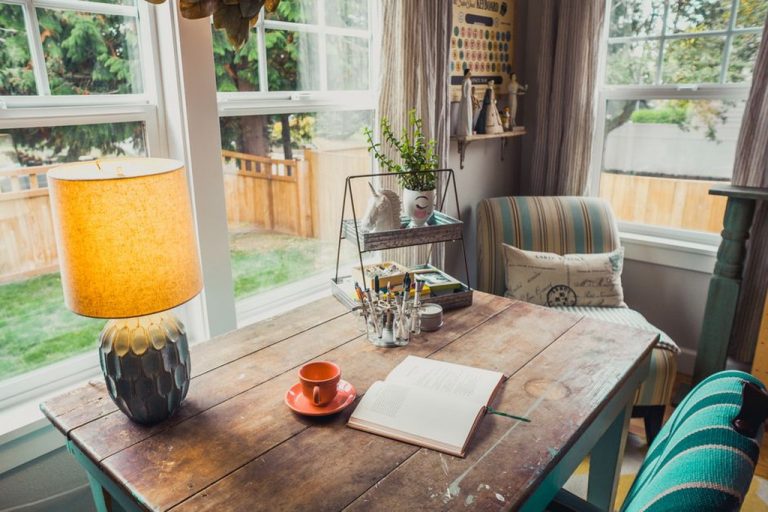
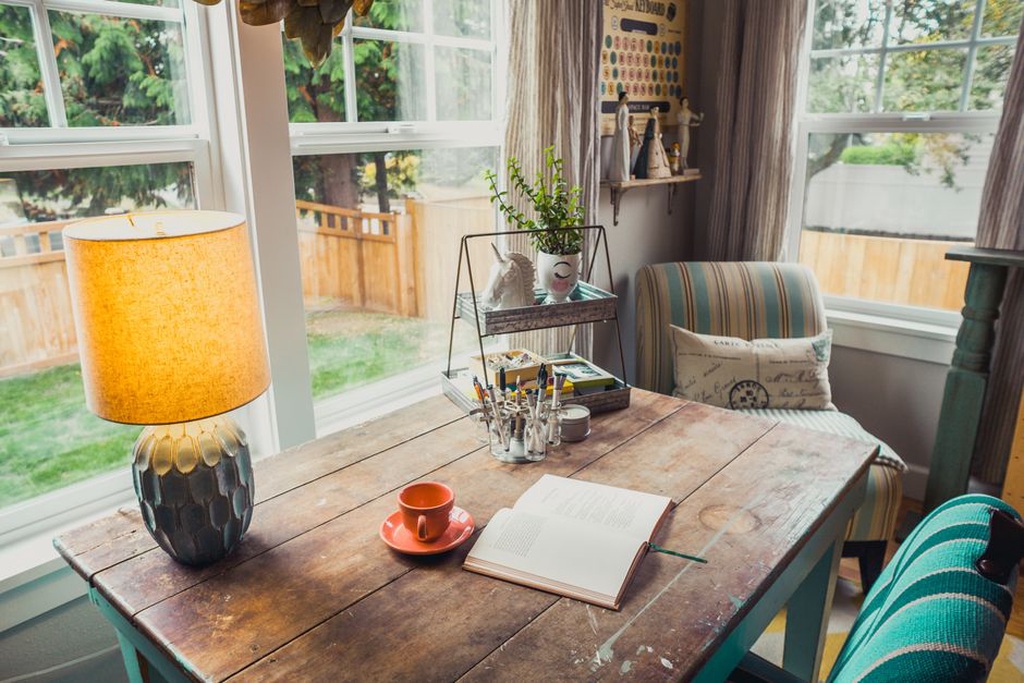
A reading chair can look inviting and still leave you shifting position after ten minutes. Before choosing a spot, sit there with a book for a full chapter. Notice whether the light reaches the page, your feet rest comfortably, and there is somewhere to put the book when you pause. Those small tests are more useful than trying to recreate a picture-perfect nook.
Choose a spot you can actually use
Start with an underused part of a room rather than assuming you need a separate space. A corner of the living room, the end of a bedroom, or a wide landing may work. Leave enough clearance to sit down and stand up without squeezing past furniture. If other people use the room, choose a location where a lamp and side table will not block their route.
Pay attention to what happens there at the time you usually read. Morning sun may be pleasant but too bright on a white page; an evening corner may be dim or close to a noisy television. Windows can provide excellent daytime light, but glare and drafts matter. Try the space with the blinds in their usual position and with the room's everyday sounds, not just when the house is quiet.
If you share your home, a reading corner does not have to be silent to be useful. A seat facing away from a screen, a rug that softens footsteps, or an agreed period when the television stays low can make a practical difference. Keep exits, vents, and heaters clear rather than using furniture to build an enclosed nook.
Build comfort around your body
Find a seat that supports a change of position
The best seat is one you can remain in without bracing your shoulders or holding a book at an awkward angle. Check that your back has support and that your feet can reach the floor. If the seat is deep, a firm cushion behind your lower back may help; if your feet dangle, try a stable footrest. An armrest or small pillow can support an elbow when you hold a heavier book.
A soft chair is not automatically a comfortable one. Deep cushions can make it difficult to get up, while a rigid seat may feel fine for five minutes but not thirty. Test what you already own before buying anything. A dining chair with a cushion and a nearby footstool may suit you better than an oversized armchair.
Leave space to vary your posture. You might sit upright for a paperback and put your feet up for an audiobook. If sitting for long periods causes discomfort, shorter reading sessions and a chance to stand or move around may be more useful than adding more pillows. Persistent pain deserves a conversation with a healthcare professional rather than a furniture workaround.
Put light where the pages are
Good reading light should illuminate the book without shining directly into your eyes. A movable floor lamp or table lamp lets you aim light at the page as the daylight changes. Position it to reduce the shadow cast by your hand or head, then check the result in your normal reading position. A shade can soften glare, and an adjustable lamp is helpful when two people use the same chair at different times.
If you read on a screen, adjust its brightness to suit the room instead of relying on a bright display in darkness. For print, check whether the type is comfortable to read before assuming that a stronger bulb will solve every problem. Keep lamp cords away from walkways, and make sure the switch is reachable without getting out of the chair.
Keep essentials within easy reach
A small, steady surface is often more valuable than a large bookshelf beside the chair. It should hold a book, glasses, and a drink without crowding the space. If you keep a warm drink nearby, use a stable table rather than balancing it on an armrest. A coaster and an easily cleaned surface make spills less troublesome.
Choose storage according to what you actually read. One basket can hold a current book, a notebook, and a spare bookmark; a shelf across the room can hold everything else. Too many stacks around the seat make it harder to clean and easier to lose the book you intended to finish. For audiobooks, an accessible charging point and a place for headphones may be enough.
- Within arm's reach: current book, reading glasses if needed, lamp switch, and a stable place to set a drink.
- Nearby but not underfoot: a throw, spare books, headphones, or a notebook.
- Out of the corner: loose cords, unstable piles, and items that make the seat a general storage spot.
Make the space pleasant without adding clutter
Comfort depends partly on temperature and texture. A washable throw can help in a cool room; in a warm room, breathable upholstery or a simple cushion cover may feel better than layers of blankets. If the corner sits near a window, check for drafts before rearranging the whole room. Curtains or moving the chair a little may be enough.
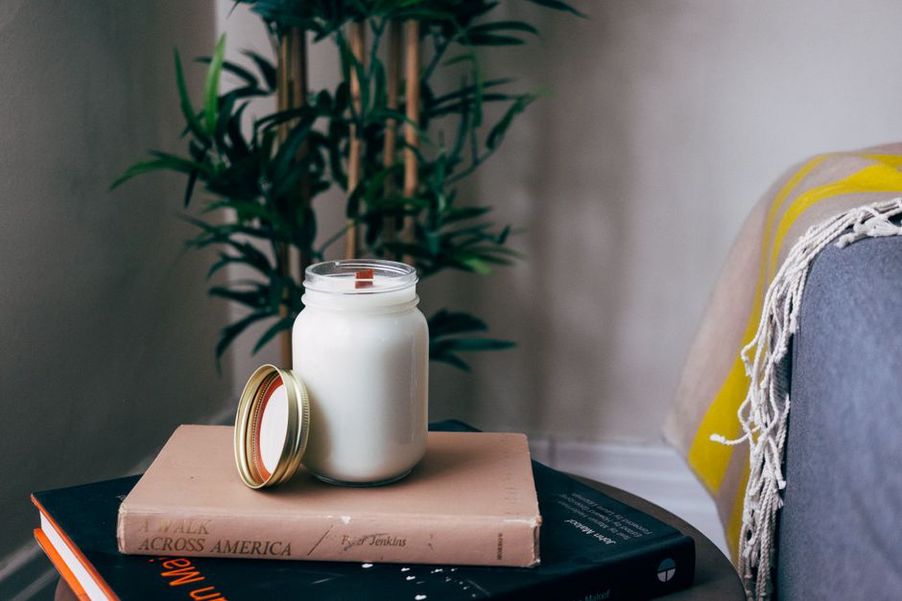
Choose a few details that make you want to return: perhaps a plant that suits the available light, a favorite print, or a rug that feels comfortable underfoot. None is essential. Scented candles and diffusers can be distracting or irritating for some people, and an open flame near books or fabric needs careful supervision. A lamp gives you a gentler way to change the atmosphere without adding scent.
A reading corner can also be a calm place to keep brief notes if you are tracking meals and digestive symptoms, but it need not become a place to scrutinize every sensation. A notebook and pen are enough if that habit is useful to you. Discuss persistent symptoms and any planned dietary changes with a doctor rather than relying on a journal or an elimination diet for answers.
Test the setup before spending more
Use the corner for a few ordinary reading sessions before deciding what to change. When something feels off, identify the specific problem: a dark page, unsupported feet, nowhere to set glasses, or noise at your usual reading time. Fix one issue and try again. This avoids buying a lamp when the real problem is that the chair faces a bright window.
For a no-cost first version, move an existing chair near a side table, borrow a lamp from another room, and place one book within reach. Read there at the time you normally would. If the page is well lit but your shoulders tense as you hold the book, try supporting your elbows with a cushion before replacing the chair.