
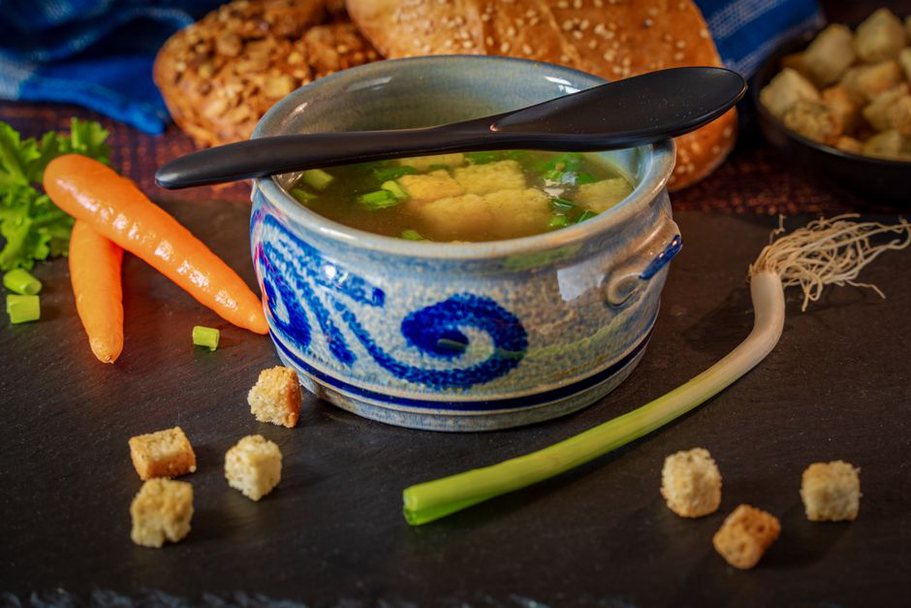
Bone broth is made by gently simmering bones, connective tissue, and sometimes meat scraps in water until the liquid becomes savory and full-bodied. For people eating Paleo, it is a useful way to use more of the animal, add variety to simple meals, and make food more appealing when appetite is low or the menu feels restrictive.
Online claims often give bone broth more credit than it deserves. It is food, not a cure for digestive disease, autoimmune conditions, or chronic symptoms. A well-made broth can still provide fluid, protein, and small amounts of minerals, while giving soups, braises, sauces, and simple warm drinks more substance.
What bone broth contributes to a Paleo pattern
Bone broth nutrition varies greatly according to the bones used, cooking time, amount of meat and connective tissue, dilution, and whether the fat is skimmed. Broth made with meaty chicken frames or beef shanks will usually contain more protein than a thin liquid made from cleaned bones alone. If it gels when chilled, that suggests gelatin from collagen-rich connective tissue, though gel firmness does not reveal the exact protein content.
Protein and gelatin-containing amino acids
Gelatin comes from collagen, a structural protein found in skin, cartilage, tendons, and bones. It contains amino acids such as glycine and proline. These can be part of a varied diet, but broth is not a complete substitute for substantial protein foods such as fish, eggs when tolerated, poultry, meat, or legumes for people who include them outside a strict Paleo approach.
Broth also makes it easier to use collagen-rich, often budget-friendly cuts such as chicken backs, turkey necks, beef joints, oxtail, and lamb shanks. Combined with meat and vegetables, it becomes part of a more complete meal than a mug of broth on its own.
Fluid, warmth, and meal comfort
A warm savory drink can be welcome when plain water is unappealing, especially in cold weather or when you want a light first course. Broth can also add moisture to leftover roast meat, cauliflower rice, shredded vegetables, and slow-cooked dishes. Those are practical uses, not evidence that broth “heals the gut.”
Some people find rich broth comforting, while others experience nausea, fullness, reflux, or bloating after drinking it. Tolerance varies. High-fat broth may be harder for some people to handle, whereas skimmed broth may feel lighter. Persistent or severe symptoms, or symptoms accompanied by unintended weight loss, bleeding, vomiting, fever, or major bowel changes, need medical assessment rather than dietary experimentation alone.
Minerals: useful, but not a stand-alone source
Broth contains some minerals, but it should not be relied on to meet daily calcium, magnesium, potassium, or iron needs. Mineral content depends on the ingredients and preparation, and food analyses do not consistently support claims that bone broth provides large amounts of calcium. A Paleo diet still benefits from a broad mix of vegetables, fruit, seafood, meat, eggs if tolerated, nuts and seeds if included, and other appropriate foods.
Salt is another variable. Homemade broth can be seasoned after cooking, which gives you more control. Packaged broths vary widely in sodium and protein. A carton labeled “bone broth” may be convenient, but the name does not guarantee a concentrated or high-protein product.
| What to check | Why it matters |
|---|---|
| Protein per serving | Helps distinguish a substantial broth from a lightly flavored stock |
| Sodium per serving | Useful for people who need or prefer to monitor salt intake |
| Ingredients | Flags added sugar, non-Paleo ingredients, or seasonings that do not suit an elimination plan |
| Serving size | Prevents comparing products using different volume assumptions |
Bone broth during Paleo and elimination diets
When several foods are removed at once, meals can lose familiar flavors and textures. Broth adds variety without making cooking complicated. Use it to cook root vegetables, moisten shredded chicken, or make a soup with squash, greens, and a tolerated protein.
During a strict elimination phase, simple is often best. Make broth with ingredients already known to fit the plan, such as bones, water, and salt if permitted. Aromatics and spices are optional. Onion, garlic, pepper, chili, celery, and herb blends can be difficult for some people or excluded by a particular protocol, so they should not be treated as universally suitable.
- Keep batches plain: Season individual portions later, especially when testing tolerance.
- Change one variable at a time: A new broth, spice blend, or rich fatty cut can each affect comfort differently.
- Use a food-and-symptom record: Note portion size, ingredients, timing, and symptoms without assuming one meal proves causation.
- Prioritize enough food: Broth can accompany meals, but it should not unintentionally replace adequate calories and protein during a restrictive phase.
People following a low-histamine approach sometimes report trouble with long-simmered broths, but histamine tolerance is complex and symptoms are not specific to histamine. For someone who has already identified a pattern with a clinician or dietitian, a shorter-cooked stock that is cooled promptly and frozen in portions may be a reasonable kitchen experiment. It is not a diagnostic test.
How to make a balanced, practical batch
Use bones with some meat and connective tissue attached for a fuller flavor. Chicken carcasses, wings, feet, necks, beef knuckles, and shanks are common choices. Cover them with cold water, bring the pot just to a gentle simmer, skim foam if you like, and cook until the broth tastes flavorful. A hard boil can make broth cloudy and break fat into the liquid, but it does not make it more nutritious.
- Place bones and any tolerated aromatics in a large pot or slow cooker.
- Add water to cover and simmer gently rather than boiling hard.
- Strain out the solids, then cool the broth quickly in shallow containers.
- Refrigerate for short-term use or freeze in labeled portions for later meals.
- Reheat only what you need, then add salt, vegetables, and protein for the meal.

Food safety matters more than extending the simmer. Do not leave a large pot at room temperature for hours while it cools. Divide it into smaller containers, cool it promptly, and refrigerate or freeze. A chilled batch may develop a solid layer of fat on top. Keep it for flavor, remove it for a lighter broth, or save it for cooking if it smells fresh and has been stored safely.
Ways to use it without turning it into a ritual
Bone broth is most useful when it makes everyday cooking easier. Use it as the liquid for vegetable soup, add it to a pan after browning meat for a quick sauce, or sip a small mug alongside a breakfast that includes more substantial food. A simple dinner could include shredded chicken, carrots, zucchini, leafy greens, and broth, with extra olive oil or avocado if more energy is needed.
If you are changing your Paleo diet because of ongoing digestive symptoms, fatigue, pain, or suspected food reactions, discuss those changes with a doctor or registered dietitian. For a clear home trial, keep one batch consistent for several days: plain chicken broth made from the same ingredients and used as a lunch soup base while the rest of the menu stays stable. Record the portion and any response before deciding whether it belongs in your regular rotation.