A large bowl of raw cauliflower may leave you more bloated than a plate of fish, cooked carrots, and sweet potato, even though both meals fit a paleo pattern. When bloating follows a meal, it helps to look beyond whether the food was “healthy.” How much did you eat? Was it raw or cooked? What else was on the plate?
Bloating is a feeling of fullness, pressure, or swelling in the abdomen. You might also notice visible distension, gas, or a change in bowel habits, though these do not always occur together. Some gas is a normal part of digestion. If bloating is frequent, painful, or persistent, talk with your doctor rather than making your list of permitted foods shorter and shorter.
Why a paleo meal can still leave you bloated
Paleo eating commonly removes grains, legumes, and dairy while emphasizing vegetables, fruit, meat, fish, eggs, nuts, and seeds. That shift can change how much fiber, fat, and fermentable carbohydrate you eat, sometimes quite quickly. Gut microbes ferment some carbohydrates and produce gas, but the amount and timing of discomfort differ from person to person. Swallowed air, constipation, and the gut’s response to normal stretching can play a part, too. Paleo is not necessarily a low-gas diet, and bloating after a paleo meal does not prove that any one ingredient is the culprit.
Picture a lunch of a large raw salad with onions and apple slices, a few handfuls of nuts, and sparkling water. The volume of raw produce, fermentable carbohydrates, concentrated fat, and carbonation could all matter. Changing everything at once might help you feel better, but it would be hard to tell why.
Start with the shape of the meal
Choose a comfortable portion before changing ingredients
A very large meal can create pressure even when the ingredients usually agree with you. If bloating tends to follow an oversized dinner, try a moderate serving and pause before having more to see whether you are comfortably full. There is no universal portion size; appetite, activity, and nutritional needs vary. The goal is not to eat too little. It is to avoid pushing past comfortable fullness.
Eating quickly may also mean swallowing more air and missing early signs that you have had enough. Sitting down, chewing well, and giving yourself time to eat are simple things to try. If lunch usually happens at your desk, a short break from the screen may help you notice your pace. These habits will not address every cause of bloating, but they do not require cutting out nutritious foods.
Cook vegetables in a way your gut tolerates
Raw vegetables have their place, but you do not need a huge salad to get them into a meal. Cooking, roasting, or simmering softens their texture and reduces their volume. You could swap a large serving of raw broccoli for a smaller serving of cooked broccoli alongside roasted carrots. Cooking does not remove every gas-producing carbohydrate, so the serving size may still make a difference.
Onions, garlic, cauliflower, mushrooms, asparagus, and some fruits contain fermentable carbohydrates that can cause gas for some people. That is not a reason to ban them on sight. If you notice a possible pattern, try a smaller amount in an otherwise familiar meal, or choose a different vegetable for a few meals and compare. Keep variety where you can: vegetables still provide fiber and nutrients when you need to adjust a particular portion.
Watch for paleo swaps that change more than you intended
Replacing bread or cereal with paleo alternatives can quietly increase your intake of nuts, seeds, dried fruit, or added sweeteners. An almond-flour muffin may contain far more nuts than you would usually eat by the handful. A date-and-cashew snack can pack a large serving of ingredients that some people find hard to digest. Neither is automatically a problem, but concentrated foods make portions easy to underestimate.
Coconut products also vary. Coconut milk, coconut cream, and coconut-flour baked goods have different amounts of fat and fiber. If symptoms follow a particular substitute, consider the whole recipe and serving size before blaming all coconut foods, or all paleo baking.
Some people feel uncomfortably full after a rich meal, especially when it is large as well as high in fat. You could try less added oil, a lighter sauce, or a different cooking method while keeping the meal satisfying. If symptoms after fatty foods persist, particularly if you have pain, discuss them with a clinician instead of repeatedly removing foods.
Check what is in the glass
Sparkling water and other fizzy drinks can add gas, and drinking quickly through a straw may mean swallowing more air. If pressure builds during or soon after meals, try still water sipped at a comfortable pace for several meals. Keep drinking normally, especially if you have increased your fiber intake; restricting fluids is not the answer.
Think about what happens after the meal, too. Chewing sugar-free gum can increase air swallowing, while sugar alcohols in some gums and mints can cause gas or loose stools. A symptom that seems tied to dinner may have more than one contributor.
Give fiber changes time—and avoid the all-or-nothing trap
Switching to paleo can mean eating much more fruit and vegetables overnight. Fiber supports regular bowel movements and feeds gut microbes, but a sudden increase can bring temporary gas or discomfort. If you previously ate little produce, add higher-fiber foods gradually. Spread vegetables across meals rather than putting a day’s worth into one enormous salad.
Constipation can accompany bloating. If stools have become infrequent or hard to pass, consider whether you are eating enough overall, drinking to thirst, and getting a mix of fiber-containing foods you tolerate. A brief walk after a meal may feel good and provides everyday movement, but it is not a treatment for an underlying condition. Piling on raw vegetables is not always helpful. Get medical advice if constipation persists, worsens, or comes with significant pain.
Research on the microbiome helps explain why people respond differently to food, but it cannot point to one “best” paleo menu for everyone. Diet changes can shift microbial activity, and the same food can cause symptoms in one person but not another. Bloating alone cannot tell you whether your microbiome is healthy, and it is not a reason to chase a test result or assume you need supplements.
Use a short, focused food-and-symptom check
If bloating keeps recurring but is not urgent, a few notes can be more useful than trying to remember every uncomfortable meal. For several typical days, jot down when you ate, roughly what and how much you had, when bloating began, and any bowel movements. Include context that might matter, such as a rushed meal or a fizzy drink. You do not need to weigh food or score every sensation.
Look for a pattern that repeats, not one bad afternoon. If a large serving of cauliflower seems to precede discomfort several times, compare it with a smaller, cooked serving in a similar meal. Change the vegetable, portion, fat content, and eating speed all at once, and you may feel better without knowing what helped. Try one manageable adjustment, then see whether the difference holds.
- Timing: Did pressure start while eating, shortly afterward, or much later?
- Serving size: Was the suspected food a garnish or the main part of the meal?
- Preparation: Was the vegetable raw, roasted, or cooked until tender?
- Context: Were you eating quickly, constipated, or having a different-than-usual day?
Those notes can give a healthcare professional something concrete to discuss with you. They cannot diagnose a food intolerance. Symptoms fluctuate, sometimes for reasons unrelated to the last meal, and a food that appears often is not necessarily the cause.

Keep restrictions proportionate
It can be tempting to remove every ingredient mentioned in bloating advice. Within paleo, that can leave you with little beyond meat and a few vegetables, making meals less varied and nutritional needs harder to meet. One uncomfortable serving does not make a food permanently off-limits. A smaller portion or different preparation may be worth trying first.
Some people also follow the autoimmune protocol, or AIP, which has a more extensive elimination phase than standard paleo. AIP is not the default next step for bloating, and neither approach replaces an assessment of ongoing symptoms. If you are considering a restrictive elimination diet, discuss the reason for it, nutritional adequacy, and a plan for returning foods with a clinician or dietitian. Our guide to preparing for an AIP elimination phase covers the practical planning, not restriction as an answer to every digestive complaint.
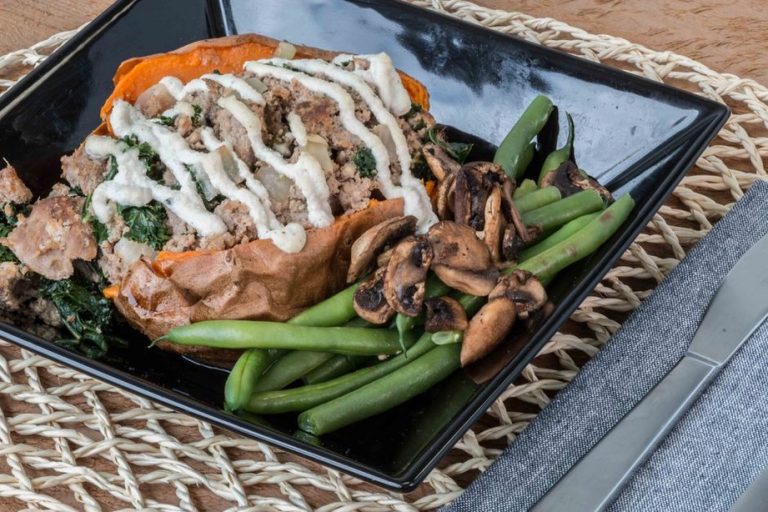
If you already avoid several foods, notice what takes their place. Leaving onions out of a meal may be straightforward; removing many vegetables, fruits, nuts, and starches at once can make eating difficult and hide useful patterns. A paleo-style plate can still include protein, a cooked vegetable you tolerate, a starchy plant food such as sweet potato, and some fat. The foods can change without the menu growing narrower indefinitely.
Know when bloating needs medical attention
Discuss persistent or worsening bloating and any substantial diet change with your doctor. Seek prompt medical advice if bloating comes with severe or persistent abdominal pain, vomiting, blood in the stool, unexplained weight loss, fever, or a marked change in bowel habits. A food experiment is not enough in those situations. A clinician can also help if discomfort regularly disrupts meals or daily life, even without an obvious warning sign.
For a modest first check, keep a familiar dinner mostly the same but replace a large raw salad with cooked carrots. Leave the protein, starch, and usual portion about as they were, then note when you ate and how you felt afterward. If the bloating continues, you will have a specific observation to bring to your doctor.