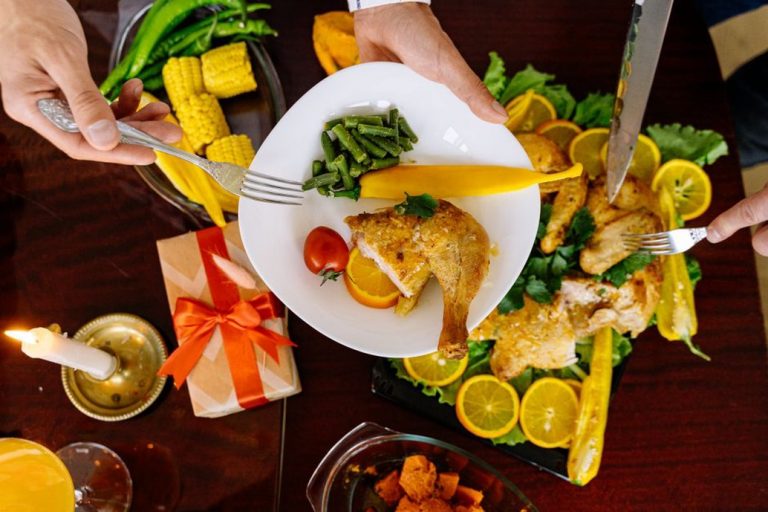
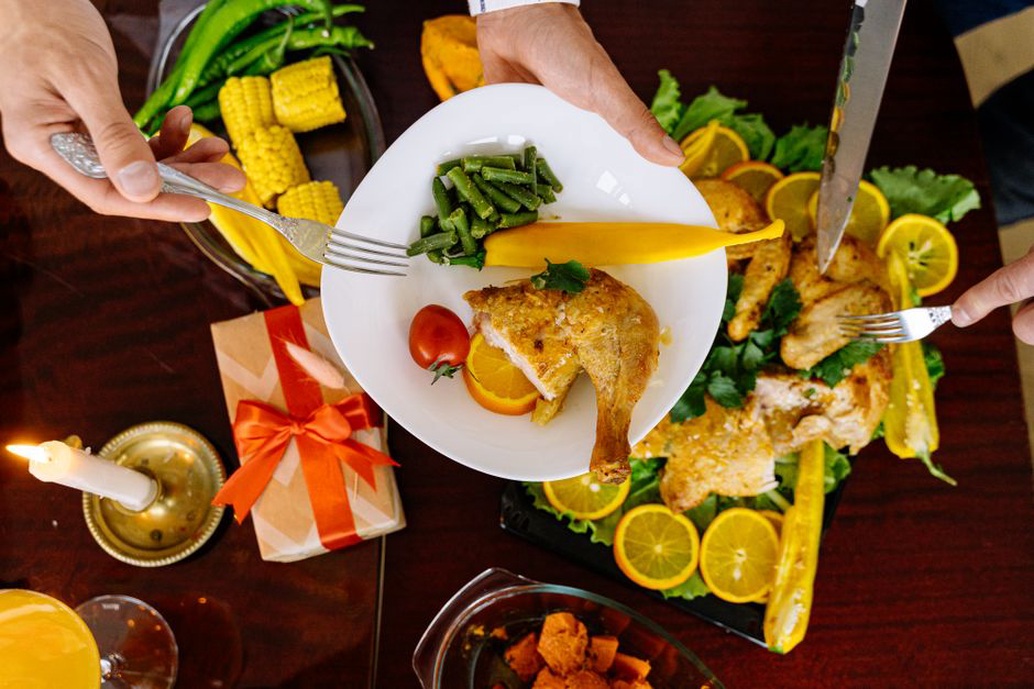
Choose a main dish that can sit for 20 minutes without suffering. Roast chicken or a tray of vegetables gives you time to greet guests, answer an ingredient question, or finish setting the table. Fish that needs your full attention just before serving may be delicious, but it makes for a more hurried welcome.
For four to six people, one main, two sides, and a simple finish are usually plenty. Guests need enough to eat comfortably, not a restaurant menu that tests your timing.
Set the invitation up for an easy evening
Leave a little space between arrival and dinner. If guests come at 6:30, you might aim to eat around 7:15 rather than seating everyone immediately. Share the approximate dinner time, especially with anyone who needs to plan meals or medication.
Ask about food needs when you invite people, not when they are standing in your kitchen: “Is there anything you avoid or need me to account for?” That leaves room for allergies, religious requirements, preferences, and current dietary plans. If a guest follows a paleo-style or elimination diet, ask which ingredients they eat. A label alone will not tell you; autoimmune protocol plans, for example, vary by phase and by person.
For a serious food allergy or celiac disease, ask what precautions the guest needs. Leaving an ingredient out of a dish may not be enough if shared utensils, cutting boards, or surfaces allow cross-contact. Be candid about what your kitchen can accommodate. A guest may prefer to bring a dish they trust, and that is not a criticism of your hospitality.
Build a menu from components
A meal served in separate components lets people make their own plates without requiring you to cook several dinners. Start with a plainly seasoned protein or another substantial main, add a generous vegetable dish and a filling side, then serve sauces and toppings separately. Nobody has to explain every choice they make.
Roast chicken with lemon and herbs could sit alongside roasted carrots, a large green salad, and potatoes or another starch that suits the group. Put the dressing on the table. Offer seeds, cheese, bread, or a spicy sauce only if they fit guests’ needs, and give each its own serving spoon. A plant-based guest needs a substantial alternative main—perhaps a bean dish, if beans suit their diet—not just extra salad.
If someone avoids foods for digestive comfort, resist guessing what is “safe.” Onion, garlic, legumes, raw vegetables, and rich sauces affect people differently, and tolerances can change. A cooked vegetable option and dressings served on the side give guests flexibility without making health claims about the meal. Persistent symptoms and major changes to an elimination diet are worth discussing with a doctor; dinner-party adjustments are not a substitute for medical care.
Check the details that hide in plain sight
Before shopping, review the whole menu, including marinades, stocks, dressings, and garnishes. If you have agreed to avoid an allergen, check packaged ingredient labels and keep the relevant utensils separate during preparation. Note which dishes contain ingredients such as dairy, eggs, nuts, or wheat so you can answer questions accurately. Do not call a dish allergy-safe unless you can account for both its ingredients and how it was prepared.
Dinner is not the time to test a food an elimination-diet guest has not yet reintroduced. They can decide when and how to do that. Your part is to offer clear ingredient information and enough options for a satisfying meal.
Plan around the oven, not just the recipes
Three easy dishes can still cause trouble if they all need the oven at different temperatures. Work backward from dinner time, checking oven space, stovetop burners, refrigerator space, and serving dishes. Make at least one side ahead or choose one that works at room temperature.
- Two or three days before: Confirm the guest count and food needs, choose the menu, and check your chairs, plates, and serving utensils.
- The day before: Shop, prepare a dressing or sauce, wash salad greens, and make a dessert that keeps overnight.
- Earlier on the day: Set the table, chill drinks, prepare vegetables, and clear a shelf for anything guests may bring.
- Before guests arrive: Start the longest-cooking dish, put water and glasses within reach, and leave yourself only a few finishing tasks.
Think of these as checkpoints, not a strict timetable. Cooking times vary with the dish and its size. For meat or fish, use a food thermometer and appropriate food-safety guidance rather than relying on the clock alone. Keep perishable dishes chilled until needed instead of leaving them out all evening.
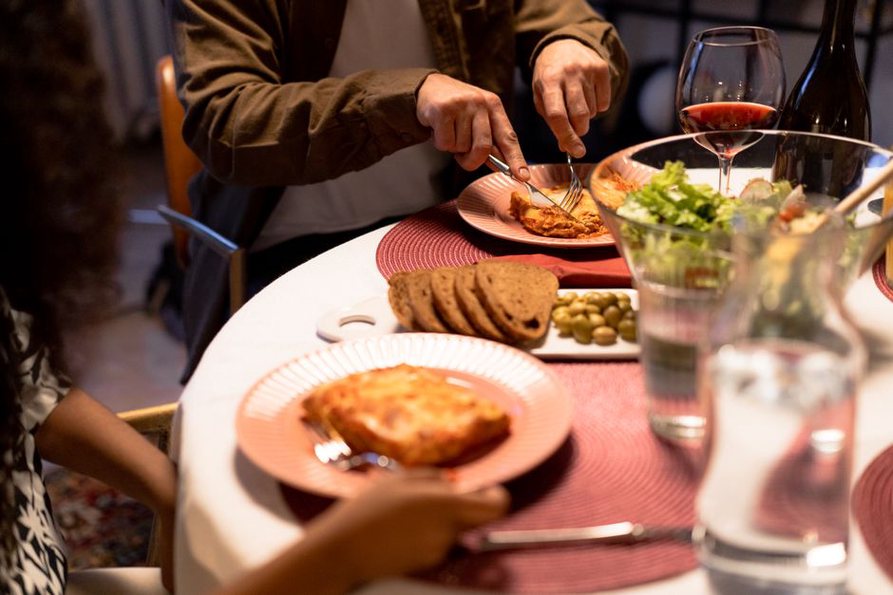
Make the room easy to settle into
Show guests where to put coats, find the bathroom, and get a drink. Clear a spot for bags and coats, set out water, and offer a nonalcoholic drink alongside any alcohol. Then you can keep cooking without leaving someone waiting for directions.
A small group does not need elaborate decorations. Give people enough light to see their food and chairs they can comfortably sit in through dinner; keep the music low enough for conversation. Move candles and tall flowers out of sightlines. If the dining table doubles as your prep space, set it before guests arrive so you are not shifting cutting boards around them.
Help is welcome, but make the request specific and optional. “Could you put these napkins on the table?” is easier to answer than a general plea for help. Plan a meal that still works if guests would rather sit and talk.
Serve without putting anyone’s plate under a spotlight
Bring separate dishes to the table where practical and let guests serve themselves. Mention ingredients plainly when they matter: “The carrots have olive oil and thyme; the dressing has mustard.” There is no need to announce anyone’s dietary needs, ask them to explain their choices, or praise them for eating something.
If a guest needs a separately prepared plate, agree on the arrangement privately beforehand. Use clean utensils and keep the plate apart from dishes that could cause cross-contact. If you spot a mistake, tell the guest immediately rather than assuming a small amount will not matter.
Leave a little time between the main course and dessert. Fruit, a make-ahead dessert, or tea avoids another cooking project, and guests can decline a course without giving a reason. Keep containers handy if you want to offer leftovers, but ask before packing food for someone whose diet may not include every dish.
After dinner, clear enough space for people to sit comfortably; the major washing-up can wait if circumstances allow. Refrigerate perishable leftovers promptly. If a guest takes food home, label the container with the dish name and the ingredients you know. That is kinder than asking them to remember what was in the sauce later.