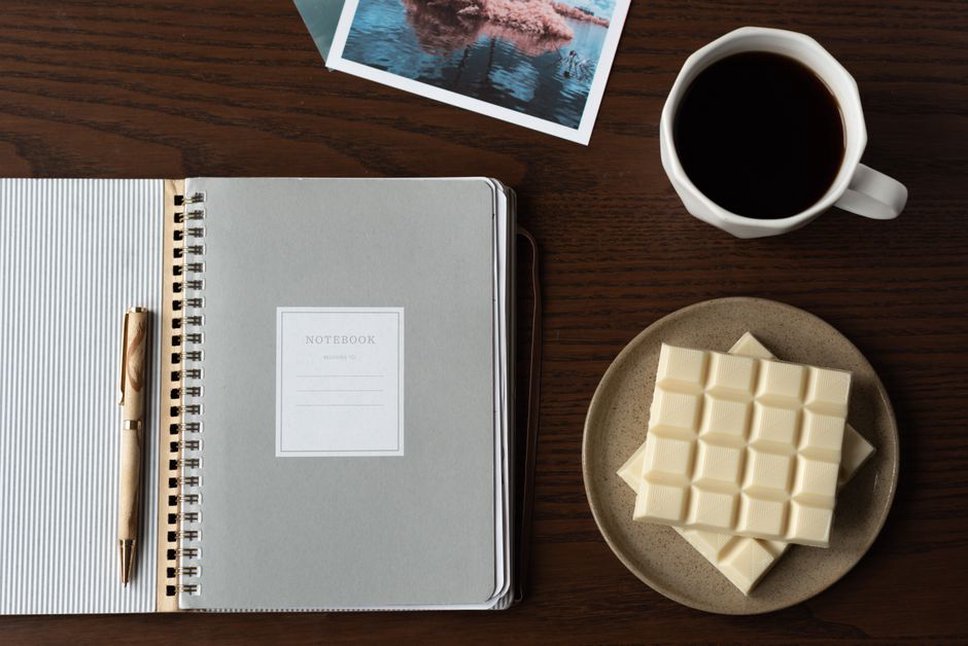
Put the date at the top of a page and write one thing you noticed: “I was hungry before lunch,” “The walk felt easier than yesterday,” or “I kept thinking about a conversation.” That is a journal entry. You don't need a story, an insight, or a full page.
“Write anything” can be surprisingly hard to act on. A repeatable starting point helps. You might use a journal to save everyday details, work through a thought, or notice what is happening around meals and digestive comfort. You don't have to write beautifully, or every day, for any of those purposes.
Choose one job for the journal
Before picking a notebook or app, ask what you want your entries to help you do. “Put my thoughts somewhere before bed” is enough of a purpose. So is “Remember how my afternoons feel while I change my lunch routine.” You can change your mind later; for now, choose something that makes the next entry easier.
- To remember: Note an event, detail, or conversation you might otherwise forget.
- To reflect: Describe what happened and how you feel about it, without trying to settle everything at once.
- To spot routines: Record a few consistent details, such as meal times, sleep, stress, movement, and digestive comfort.
- To plan: Write down a decision you face and one small action you could take next.
If you're unsure, start with remembering. “I made lunch later than planned and ate at my desk” is enough. Add another thought if one comes; otherwise, stop there.
Make the first entry deliberately small
For the first week, give yourself three minutes or three lines. Pick a time and place where you already pause: a chair after dinner, a desk before work, or your phone during a commute if you aren't driving. Use paper if you like the space it gives you. Use an app if that's what you'll actually open.
Here's a three-line entry to try:
- What happened: “I ate lunch later than usual.”
- What I noticed: “I was distracted and still hungry afterward.”
- What I might try: “Put lunch on my calendar tomorrow.”
The third line is optional. You don't need to turn every experience into a task; “I don't know what I think yet” is a perfectly useful ending. Fragments work, too: “Rain. Long meeting. Good soup. Restless evening.” Your first entry only needs to be a record you can come back to.
Use prompts that ask for observations, not revelations
A question like “How do I feel about my life?” can be hard to answer on an ordinary Tuesday. A narrower question gives you something to start with. Pick one and answer it plainly; follow the thought further only if you want to.
- What took more time than I expected?
- When did I feel comfortable or uncomfortable today?
- What detail do I want to remember from this week?
- What changed between the start and end of the day?
- What am I unsure about, and what information would help?
- What did I enjoy eating today, even if the meal didn't go to plan?
It's fine to answer the same question for a month. Familiar prompts make it easier to notice when your answer changes. And if nothing comes to mind, write “Nothing stood out today,” then add one ordinary fact. An unremarkable day still belongs in a journal.
When the journal is about food or digestive comfort
A food-and-symptom journal can give you a clearer account of your experience to discuss with a clinician. But if every meal starts to feel like a test, the tracking may be doing more harm than good. Try a short recording period with just a few fields that serve your purpose, rather than documenting every ingredient and sensation indefinitely.
You could note the approximate time and main components of a meal, whether it was a usual or unusual eating day, and any symptoms in plain language. Context matters, too: a rushed meal, poor sleep, a stressful afternoon, travel, or another change in routine. If you're tracking bloating, “comfortable before lunch; bloating began midafternoon; eased by evening” tells you more than “lunch was bad.”
Timing and context can help you ask better questions, but a diary cannot show that a particular food caused a symptom. Several things may change on the same day, and digestive symptoms don't always follow a simple one-meal pattern. One entry isn't a reason to make a rule about what you can eat.
Keep tracking neutral and limited
Write “bloating,” “pain,” or “felt comfortable” rather than labeling foods “good” or “bad.” A consistent scale can help you describe intensity, but it's optional. Record symptom-free days as well; without them, the journal may make discomfort look constant.
If you follow a paleo approach or are considering an elimination plan such as the autoimmune protocol, don't let the notebook become a growing list of foods to avoid. Restrictive changes can make it harder to meet your nutritional needs and may complicate what you're trying to understand. Discuss persistent symptoms and planned dietary changes with a doctor. A registered dietitian can also help you plan an adequate diet and review your notes in context. An elimination diet is not a substitute for medical assessment.
Give yourself a way back after missed days
Missed a week? Start with today's date. There's no need to reconstruct every missing day; that can make returning harder than beginning. “I haven't written since Monday. Today I noticed…” is plenty.
If writing starts to feel like an obligation, make the format smaller before giving it up. Try one line instead of three, write twice a week instead of daily, or keep a short list rather than a narrative. Shorthand is fine if you'll understand it later. If tracking makes you more anxious or preoccupied, especially with food or symptoms, pause and consider discussing that reaction with a qualified professional.
Look back without searching for a verdict
After a few entries, look for circumstances that recur, not definitive explanations. Maybe lunch gets pushed back on meeting days, or writing comes more easily in the morning. A pattern gives you a question to explore; it doesn't prove cause and effect. You needn't reread the whole notebook. Five minutes with last week's entries may tell you what you'd like to pay attention to next.
For tonight, write the date and finish this sentence: “One thing I noticed today was…” If the answer is “I was ready for dinner earlier than usual,” leave it at that. Tomorrow, you'll have a place to start.