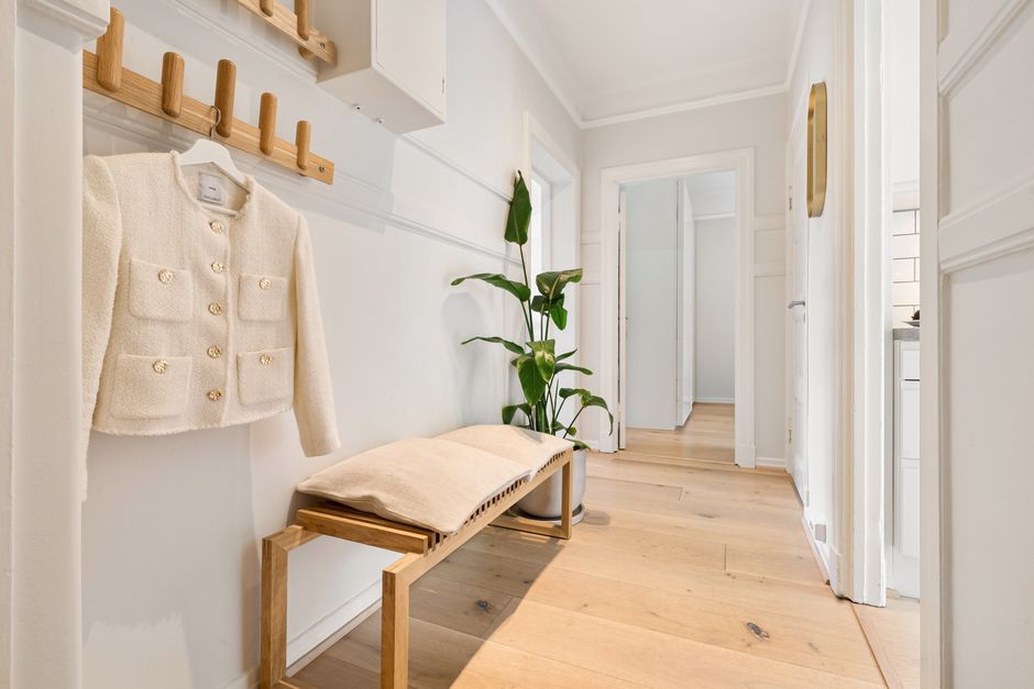
A shoe rack that blocks the door isn't useful storage. Before buying another basket or hook, open the door fully and walk in carrying a bag. Notice where you put your keys and where you stop to take off your shoes. Those habits show what the entryway needs to hold—and what must stay clear.
Start with the path through the space
A small entryway has three jobs: let people pass safely, hold everyday belongings, and contain dirt before it spreads. Storage should serve those jobs, not fill every available wall. Measure the usable floor area with the front door open, including the swing of any closet or adjacent door. If several people leave at once, check whether someone can put on shoes without trapping another person behind the door.
Mark the walking area that needs to stay open. Painter's tape lets you test the footprint of a bench or cabinet before committing to it. Then walk through carrying what you usually bring home—a backpack, groceries, or a stroller. Furniture can fit on paper and still make a corner awkward to turn.
Keep space near the door for things used every day. Seasonal coats, spare umbrellas, and rarely worn shoes can live elsewhere. If storage is limited throughout your home, rotate entryway items by season rather than keeping everything within reach all year.
Create a short landing sequence
Think through what happens when you arrive: close the door, put down small items, hang up outerwear, remove shoes, and move into the home. Each stop can be small. A shallow shelf might hold keys and mail; two sturdy hooks might be enough for this week's coats.
Give keys one predictable destination
Put a small tray, bowl, or wall-mounted holder close to where keys tend to land. It should be easy to reach, but not so close to an exterior door or window that valuables are plainly visible from outside. No room for a shelf? A hook on the side of a cabinet may keep the walkway clearer.
Save that spot for things you need when leaving: keys, a transit card, perhaps sunglasses. Mail needs somewhere to go besides a growing pile. A slim upright file works if someone empties it regularly; otherwise, take mail straight to the place where you sort it.
Put coats where they can dry and be reached
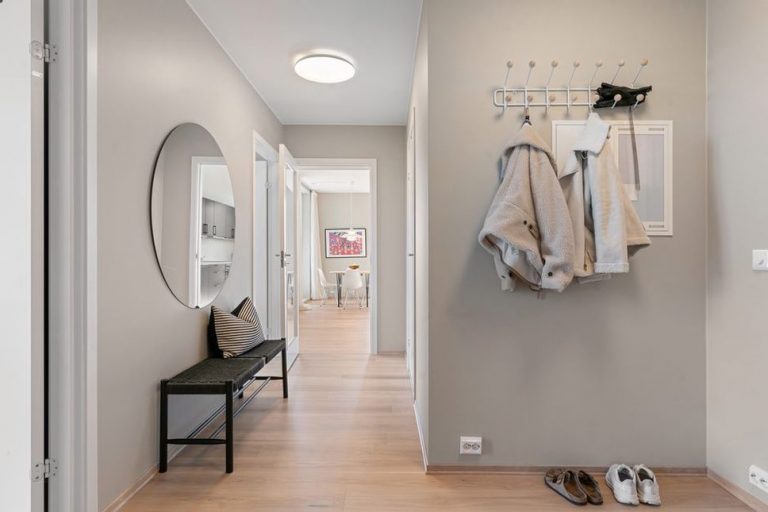
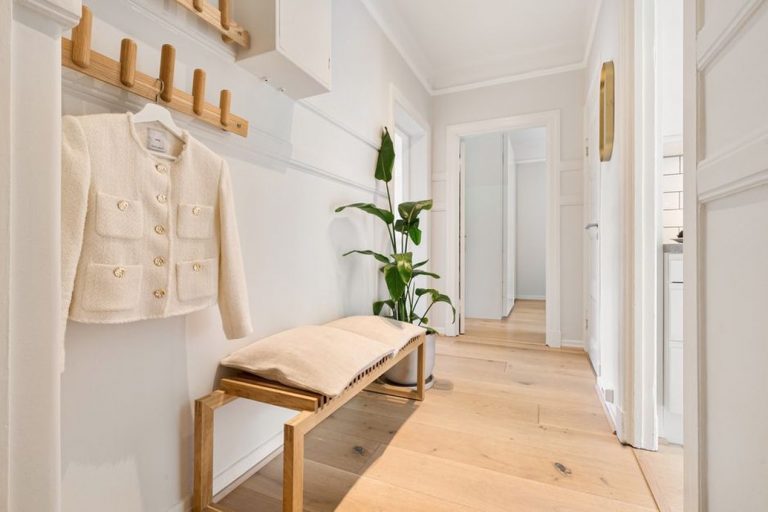
In a narrow space, hooks often work better than a crowded rail, as long as the wall and fixings can support the weight. Leave enough room between hooks that sleeves don't cover the key tray or door hardware. Put children's hooks where they can reach them. Place adult hooks above or beside them, rather than directly over a seat where hanging bags could get in the way.
Keep only current outerwear on display. Overloaded hooks make coats harder to grab and may pull loose from unsuitable fixings. Damp jackets also need air circulation; packed into a closed cabinet, they may stay wet longer. If the entryway isn't a good place to dry them, choose another spot.
Use the floor sparingly
Floor space is usually the tightest constraint. Give each floor-level piece a clear job: a tray catches water from shoes, a bench provides a seat, and a cabinet hides footwear. In a very narrow hall, trying to fit all three may leave nowhere comfortable to stand.
Count the pairs that really need to stay by the door, then choose storage for that number. A low, shallow rack works if shoes won't stick out into the path. A closed tilt-out cabinet hides clutter, but check its depth, how far it opens, and whether it holds tall boots. During rainy months, a plain tray may be easier to empty and wipe clean.
If you need a seat to put on shoes, try a bench in its intended spot before buying one. Can you sit, bend forward, and stand without hitting the opposite wall or blocking the door? A narrow stool that tucks away may be more useful than a storage bench whose lid has no room to open. Anyone who needs a stable seat for balance should choose a sturdy one, not a lightweight folding stool.
Don't let loose bags collect beneath the hooks. Dedicated, securely mounted hooks can hold bags if they won't swing into the walkway. Heavy school or work bags may be better on a low shelf or in a nearby closet, where they won't strain wall fixings.
Make vertical space easy to use
Wall storage helps only if people can use it comfortably. Put frequently used hooks and shelves within easy reach, and reserve high shelves for light items you need occasionally. Check the height of the lowest shelf or cabinet, too: it shouldn't be where someone could bump their head while bending to tie a shoe.
A shallow shelf can hold small essentials without taking up floor space. Pick one with a lip, or add a tray so items don't slide off when the door shuts. Wall cabinets conceal more, but their doors need to clear the front door and coat hooks. In a rental, check what mounting methods are allowed. Don't count on adhesive hardware to hold heavy bags or wet coats.
Check clearance before using the back of a door. An over-door organizer can interfere with the frame, weather seal, or door closer. If it makes the door hard to shut or knocks against the wall, move it. Low-profile hooks on a suitable wall may cause fewer problems.
Control wet shoes and outdoor dirt
Place the entry mat where people actually stop, rather than choosing one solely by doorway width. It should lie flat, grip the floor, and clear the door. In wet weather, a washable shoe tray can keep water off timber flooring or rugs. Empty standing water and let the tray dry so grit and moisture don't linger around the shoes.
If the entry opens straight into a living area, a second washable mat inside the door can give people a place to pause and remove their shoes. Check that its edges don't curl. A large decorative rug isn't necessarily safer or easier to clean than a modest mat with a suitable nonslip backing.
Choose an umbrella container you can empty without shifting everything around it. A narrow stand or washable bin can work, provided dripping water won't reach electrical outlets, papers, or shoes that need to stay dry. In a very tight entry, let umbrellas drip in a bathroom or another water-tolerant spot instead.
Separate daily items from occasional ones
Sorting by how often things leave the house makes it easier to decide what earns a spot by the door:
- Everyday: the current coat, regularly worn shoes, keys, and a bag used most days.
- Sometimes: a spare umbrella, guest slippers, or equipment needed weekly.
- Seasonal: heavy winter accessories, sandals, or sports gear used for part of the year.
- Elsewhere: things with no clear role in arriving or leaving, including unopened parcels and old receipts.
Give everyday items the easiest spots to reach. Occasional things can go on a labeled upper shelf or in a nearby cupboard. Moving seasonal items elsewhere frees useful space without adding furniture.
A few small containers are easier to manage than one big catchall. A basket for hats and gloves, for instance, keeps them from spreading across a shelf. Choose a basket that fits what it holds; an oversized bin tends to collect unrelated clutter. Labels can help in a shared home, though an obvious location may do more than an elaborate system.
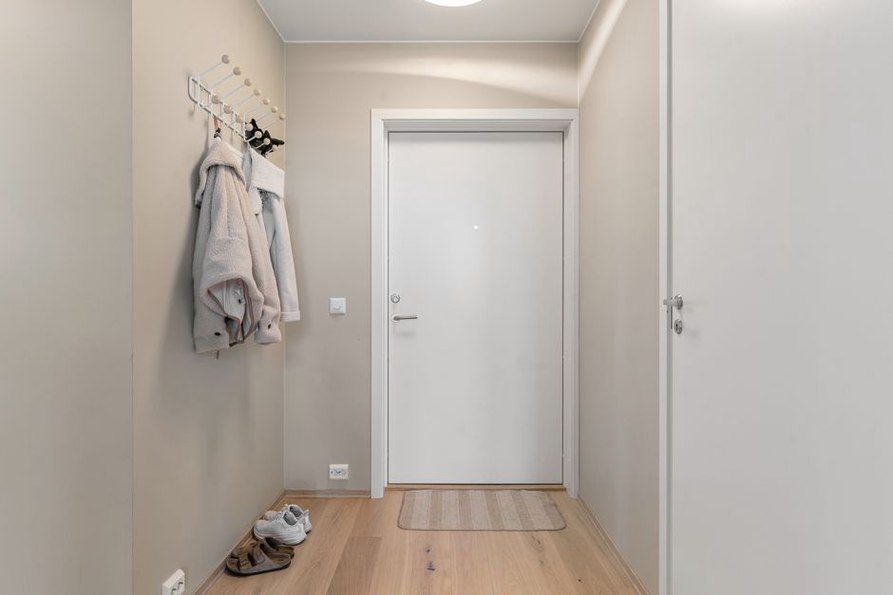
Choose lighting and a mirror for practical reasons
Good light helps you find keys, spot wet patches, and see into a dark coat corner. If the ceiling light leaves shadows, a wall light or suitable rechargeable light may help. Keep lamps and trailing cables out of the path of feet and bags. Make sure a battery-powered light is easy to recharge or replace, or it may spend too much time switched off.
A mirror can brighten a compact entry when it reflects a light source, and it offers a quick check before leaving. Mount it where someone can stand in front of it without blocking a busy doorway. With children or pets in the home, secure it properly rather than leaning it in a narrow traffic route.
Look at what the mirror will reflect before you install it. If it faces a pile of shoes, the clutter may seem twice as prominent. A clear wall or tidy hook area makes a better view than whatever happens to be opposite an empty patch.
Adapt the setup to the people using it
What works depends on who uses the entryway. For young children, a low hook and an assigned shoe spot make putting things away easier. For someone with limited mobility, clear turning space, a stable seat, reachable storage, and a nonslip floor matter more than squeezing in extra shelves. Keep essentials at a comfortable height so leaving the house doesn't require climbing or stretching.
In a shared home, give each person a limited amount of space so the first one through the door doesn't claim every hook. A separate hook or basket may help, but don't divide a tiny wall so finely that coats can't hang properly. If you have a dog, keep leads and waste bags near the exit—and out of children's reach if needed. Put wet towels and muddy gear in something washable.
When the entryway is part of a kitchen or living room, fewer visible items and matching containers can help it sit comfortably alongside the rest of the space. But don't hide essentials behind awkward doors just to keep surfaces bare. Tomorrow morning's coat and keys should still be easy to find.
Test the arrangement before adding more storage
After rearranging what you already own, live with the setup for a week. Notice where things go wrong: shoes end up beyond the mat, keys miss the tray, or the door hits a basket. Try moving the tray to where people actually remove their shoes before buying a bigger rack.
Before drilling or purchasing, check dimensions with cardboard or tape. Mark a cabinet's proposed depth on the floor, open every nearby door, and walk through with a full bag. For wall storage, check the mounting surface and use fixings suited to the expected load. Leave switches, vents, and electrical panels accessible.
A short reset will tell you whether the setup is working. Return stray shoes to their usual place, wipe the tray when it's muddy, and move outgoing mail before it becomes a stack. If five coats bury one hook, take four to a closet. There's no need for another organizer to make that hook usable again.